ABOUT US
Beijing Antaios Technology Co., Ltd. specializes in engine power solutions for small and medium‑sized construction machinery. With 10 years of expertise, we provide customized solutions and strict factory bench testing with complete test reports and traceable data to ensure reliable quality.
GET A FREE QUOTE

The Ultimate Direct-Fit cummins 4bt crate engine Guide in 2026
-
 author
 - 2,July
 author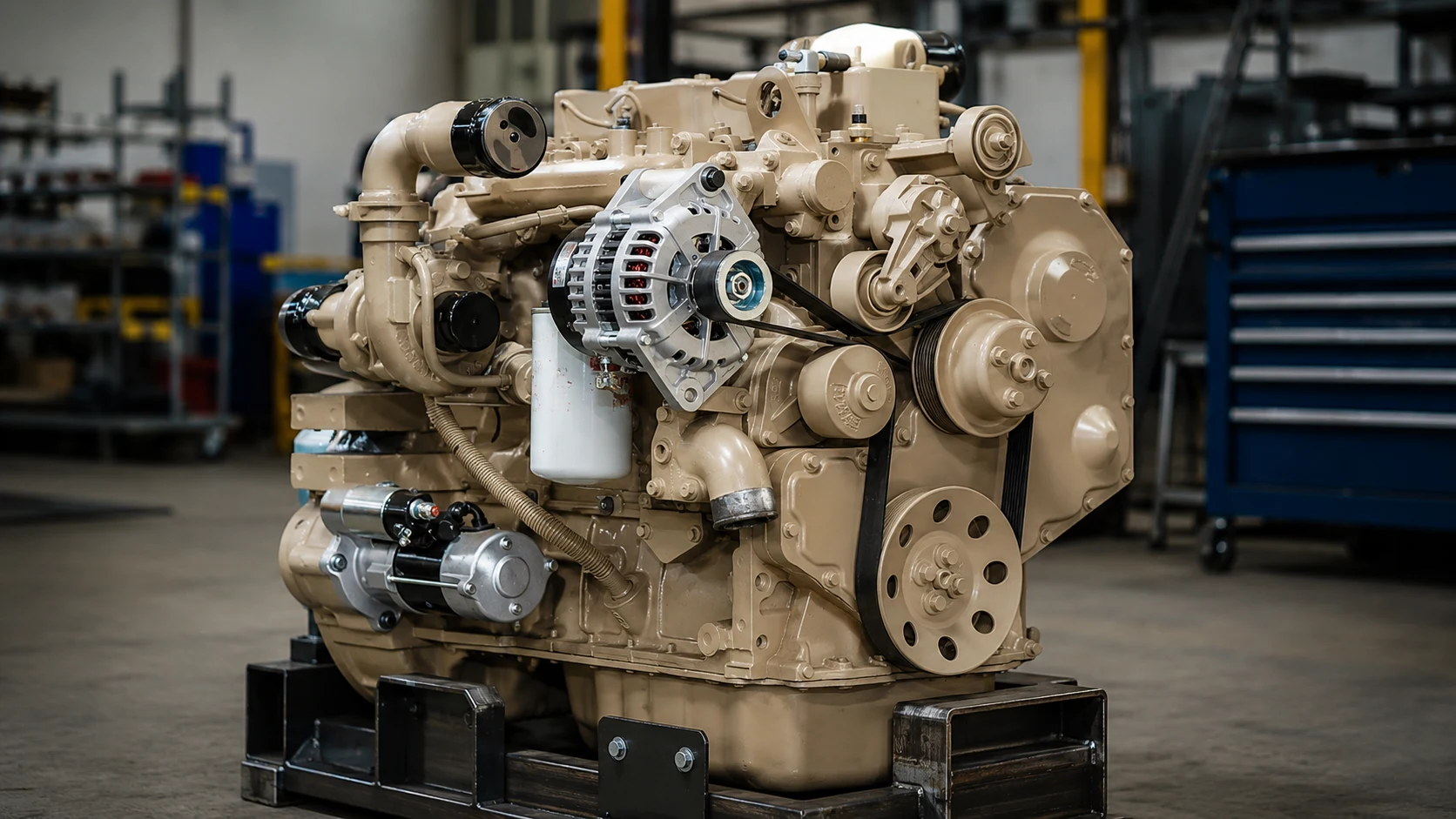
A Direct-Fit cummins 4bt crate engine should make your new equipment build easier, not turn the workshop into a guessing game. In 2026, many buyers still want the 3.9L four-cylinder platform because it is compact, familiar, and strong enough for demanding off-highway work. The real question is not whether this engine type can run. The question is whether it can fit your machine cleanly, match your working load, and arrive with real test records.
For buyers seeking a high-configuration Cummins-type alternative, ANTAIOS POWER provides brand-new assembled diesel engines for global off-highway machinery. The company focuses on technical matching rather than simple engine supply. Before recommending a unit, its team reviews your rated power, operating speed, PTO layout, cooling method, mounting space, and working conditions. You can learn more from its company background to see how its replacement solutions are supported by configuration review, bench testing, and export delivery experience.
Why Does This Engine Type Still Matter for New Equipment Buyers?
New equipment buyers are usually more cautious than repair-only buyers. A repair project can sometimes accept compromise. A new machine cannot. Once the frame, radiator, hydraulic pump, exhaust route, and service space are locked, the engine becomes part of the whole product design.
That is why a Cummins-type 4BT3.9 alternative still has real value. It gives you a compact power platform with simple mechanical logic, while leaving enough room for technical matching. For small and mid-sized off-highway machines, that balance is hard to ignore.
Compact Size for Tight Machine Layouts
The 4BTA3.9 platform uses a four-cylinder inline structure with 3.9L displacement, 102 mm bore, and 120 mm stroke. Its body size works well where a larger power unit would crowd the machine bay. That helps with radiator placement, pump routing, hood height, side service access, and transport width.
Still, “compact” does not mean “drop it anywhere.” You should check oil pan depth, mounting feet, fan side, starter position, air intake direction, exhaust outlet, and lifting clearance. A bracket that misses by 20 mm can ruin a good week.
Low-Speed Torque for Real Jobsite Loads
Many machines do not need dramatic top-end power. They need steady torque when the load bites. A drilling rig under hard ground, a compact road machine in vibration duty, or a pump package under long shifts all care about response near working speed.
This is where the 4BTA3.9 range makes sense. It gives useful torque around 1400 to 1500 rpm, which suits many hydraulic and mechanical drive layouts. You get a simple engine style, but the match still needs careful checking.
What Should a Direct-Fit cummins 4bt crate engine Match Before You Buy?
A Direct-Fit cummins 4bt crate engine should match more than horsepower. It should match power curve, torque point, cooling space, driven-end interface, and working condition. If a supplier only asks, “Which model do you want?” the buying risk is already too high.
A good selection starts with your machine. Send the equipment type, rated power target, rated speed, duty cycle, installation drawing, flywheel housing details, PTO needs, and any space limits. Photos help too. Clear photos save awkward calls later.
Core 4BTA3.9 Series Data
| Model | Rated Power | Rated Speed | Peak Torque | Dimensions | Weight |
| 4BTA3.9-C80-II | 60 kW | 2200 rpm | 350 N·m @ 1500 rpm | 867 x 544 x 998 mm | 321 kg |
| 4BTA3.9-C100-II | 74 kW | 2200 rpm | 380 N·m @ 1500 rpm | 867 x 544 x 998 mm | 321 kg |
| 4BTA3.9-C110-II | 82 kW | 2200 rpm | 460 N·m @ 1400 rpm | 867 x 544 x 998 mm | 321 kg |
| 4BTA3.9-C125-II | 93 kW | 2300 rpm | 475 N·m @ 1500 rpm | 867 x 544 x 998 mm | 321 kg |
| 4BTA3.9-C130-II | 97 kW | 2500 rpm | 475 N·m @ 1500 rpm | 867 x 544 x 998 mm | 321 kg |
The numbers look close, but the choice is not casual. A machine designed for 60 kW may not welcome 97 kW without changes to cooling, coupling, and driven equipment. More power is nice in a brochure. In the field, the right power is better.
Interface Details That Decide Installation Success
Flywheel housing, bell housing, PTO, water inlet and outlet, exhaust direction, and mounting dimensions decide whether the unit can truly fit. These are not small accessories. They shape your installation cost.
If your design uses a hydraulic pump, confirm the pump drive layout early. If the engine connects to a mechanical clutch, check the coupling and housing. If the machine works in dust or heat, cooling space should be discussed before the order is placed.
Why Is a High-Spec Cummins-Type Alternative Better Than Basic Supply?
A basic engine supply may look fine at first glance. It may even start well on video. But a high-spec Cummins-type alternative should offer more than a painted assembly. It should come with technical matching, controlled production, bench testing, inspection records, and support after delivery.
That is the difference between buying “an engine” and buying a power solution that has been checked against your machine.
Technical Matching Before Production
A proper supplier should review your old or target engine data, working condition, installation dimensions, and interface needs before production. The aim is to prevent wrong selection, poor fit, unstable performance, and delivery uncertainty.
This step matters most for new equipment builders. When the machine is still being designed, a small technical correction is easy. After the frame is welded and the hydraulic package is installed, the same correction becomes expensive.
Bench Testing That Leaves a Record
A serious engine should pass bench testing before shipment. The test should cover more than simple start-up. Power, speed, torque, oil pressure, temperature, fuel behavior, intake and exhaust data, and other key readings should be checked by calibrated tools.
| Checkpoint | High-Spec Cummins-Type Alternative | Low-Spec Trading Supply |
| Selection method | Based on nameplate, application, interface, output, and working condition | Often based on model name and price |
| Test scope | More than 30 testing items | Basic running check or unclear scope |
| Key data depth | 18 key performance data items | Usually only a few basic readings |
| Data source | Dynamometer data and sensor data cross-check | Often one data source |
| Traceability | Test videos, reports, and inspection records can be archived | Limited record, harder to trace |
| Warranty reference | 12 months or 1,200 hours | Varies by seller |
This kind of record may feel like paperwork, but it protects your project. If a problem appears later, you need test data, not just someone saying, “It was fine before shipping.”
Where Does the 4BT3.9 Series Fit Best?

The 4BT3.9 Series fits compact off-highway equipment that needs stable power, simple service, and controlled installation. It can suit construction machinery, mining support machines, pump units, hydraulic power units, portable air compressors, and marine auxiliary systems.
It is not the answer for every project. That is fine. Good selection should be honest. If your duty cycle needs a different power band or a larger platform, the technical review should say so.
New Equipment Builds
For new equipment, the engine should be planned early with the frame, cooling system, driven equipment, and service space. Waiting until the machine design is nearly finished is risky. The engine may still fit, but the accessories might not.
A direct-fit mindset helps you avoid that. You choose the engine package around the actual machine, not around a catalog photo.
Replacement-Based Equipment Redesign
Some buyers build new equipment around a familiar engine footprint because their customers already know that platform. In this case, a high-configuration Cummins-type alternative can reduce buyer hesitation. The structure feels familiar, while the supply can be more flexible.
Second-hand units may exist in the market, but they should not be the focus for new equipment projects. A brand-new tested assembly gives better control over configuration, delivery, and later support.
How Should You Move From Inquiry to Order?
A smooth order depends on clear communication. Use a practical service workflow instead of a loose chat history. The workflow should cover inquiry data, configuration tracking, compatibility checking, technical agreement, production, engine test, goods inspection, shipment documents, and delivery confirmation.
Send the Right Technical Package
Prepare rated power, rated speed, equipment type, working condition, installation drawing, space limits, cooling layout, exhaust direction, PTO needs, and special accessory requirements. If you have photos, send them. If the machine is still being designed, send the drawing before the frame is final.
Confirm the Supply Scope in Writing
The supply scope should list the engine model, rated output, speed setting, flywheel housing, PTO, cooling parts, intake and exhaust parts, starter, alternator, control items, loose accessories, packing, and documents.
Do not rely on “it should be included.” That sentence causes trouble in cross-border buying.
Ask Technical Questions Before the Crate Is Built
If your project has a tight installation bay or special working condition, speak with the technical team through the contact channel before confirming the order. A twenty-minute check before production is better than three days of cutting brackets after delivery.
Final Thoughts
The Ultimate Direct-Fit cummins 4bt crate engine decision in 2026 is not about chasing the lowest price. It is about buying a Cummins-type, high-configuration alternative that fits your equipment, matches your torque demand, passes bench testing, and arrives with clear documents.
For new equipment buyers, that extra care is worth it. The engine may be one component, but when it is wrong, the whole machine feels wrong.
FAQ
Q: What should you check before buying a cummins 4bt crate engine for a new equipment project?
A: You should check rated power, rated speed, torque demand, flywheel housing, PTO layout, mounting dimensions, cooling space, exhaust direction, working condition, and the written supply scope.
Q: Why choose a high-spec Cummins-type alternative instead of a basic engine supply?
A: A high-spec alternative gives you technical matching, controlled assembly, bench testing records, inspection reports, and clearer delivery support. This matters when the engine becomes part of a new machine design.
Q: Is the 4BT3.9 Series suitable for compact off-highway equipment?
A: Yes. The 4BT3.9 Series can fit compact construction machinery, mining support machines, pump units, hydraulic power units, portable air compressors, and marine auxiliary systems when the power, interface, cooling layout, and working condition match.
Recent Post


Related Products
Best-selling Products

912/W Series
The 912 series engine is an air-cooled diesel engine with a power range of 14-76 kW and a speed range of 1500-2500 rpm. This series of engines offers a variety of 2, 3, 4, and 6-cylinder options.
The 912W series is an upgraded version of the 912 series. To better suit the underground mining working environment, the 912W series features improved engine emissions.
Over the past decade, ANTAIOS' 912 series diesel engines have been exported to more than 100 countries. This product is mainly used in construction machinery, industrial and agricultural fields.

914 Series
The 914 series diesel engine is commonly used in underground mining environments. This air-cooled engine has a power range of 41-141 kW and a speed range of 1500-2500 rpm. It is available in both naturally aspirated and turbocharged versions to meet your different needs.
Unlike most 914 series engines produced in Chinese factories, ANTAIOS provides genuine German parts for its 914 series engines. This ensures engine quality while offering you a lower price than European brands.

2012 Series
The 2012 series engines are water-cooled engines manufactured by DEUTZ of Germany. This engine series is widely used in the fields of construction and generation. Available in both 4-cylinder and 6-cylinder configurations, common models include the BF4M2012, BF4M2012C, and BF6M2012C. If your equipment is powered by a DEUTZ 2012 series engine, ANTAIOS can provide you with suitable replacement solutions.
Our 2012 series diesel engines cover a power range of 75–155 kW, with speeds reaching 1500–2500 rpm. If you have customized requirements, we can also provide optional configurations, such as the cooling system, tailored to your specific needs

TCD2012/2013 Series
The TCD2012/2013 series is a high-pressure common rail, water-cooled diesel engine. Compared with the standard versions, this engine offers higher emission standards, making it more suitable for applications with stricter emission requirements. In past equipment applications, it has been widely used in underground mining operations.
The TCD2012/2013 series engines supplied by ANTAIOS typically have a delivery time of about one month. If the configuration requirements are relatively simple, the delivery time can sometimes be shortened to around 10 days. Since the TCD2012 series engines provided by ANTAIOS are custom-built, they are not kept in stock. All engines are scheduled for production after your order is placed.

1015 Series
The DEUTZ 1015 series engine is a large water-cooled engine, available in both 6-cylinder and 8-cylinder configurations. Unlike DEUTZ’s other 4-cylinder or 6-cylinder water-cooled engines, this engine features a V-type cylinder arrangement, significantly reducing the space required for installation.
The BFM1015 engines supplied by ANTAIOS are produced by reputable manufacturers in China. These engines are typically used in specialized equipment, where performance requirements are more demanding. Before delivery, each engine undergoes bench testing in accordance with original factory standards, along with additional testing based on specific requirements, to ensure that the engine we provide fully meets your application needs.

TCD2015 Series
The TCD2015 series engine is a V-type, 4-stroke, water-cooled diesel engine. This engine is available in V6 and V8 models, with power outputs ranging from 240-500 kW and a common operating speed of 2100 rpm. It meets Euro III emission standards and above. This engine is widely used in construction machinery, generator sets, mining equipment, marine power, and oil and gas equipment.
In addition to customizable configurations, ANTAIOS also offers custom paint colors. Unless otherwise specified, we generally offer gray paint.