ABOUT US
Beijing Antaios Technology Co., Ltd. specializes in engine power solutions for small and medium‑sized construction machinery. With 10 years of expertise, we provide customized solutions and strict factory bench testing with complete test reports and traceable data to ensure reliable quality.
GET A FREE QUOTE

A Practical 2026 Guide to Precision-Matched 6.7 Cummins Engines for Sale and Compatibility
-
 author
 - 25,June
 author
When buyers search for 6.7 Cummins Engines for Sale, the main question is not only whether an engine is available. The more important question is whether that engine can be matched to the new equipment design with fewer installation changes, stable output, and clear technical confirmation before shipment. A 6.7L diesel engine may look suitable by displacement, but the actual fit depends on rated power, rated speed, torque point, flywheel housing, PTO, cooling layout, wiring, and working condition.
Why 6.7 Cummins Engine Compatibility Still Matters in 2026
A 6.7L engine platform has been used in many types of industrial and off-highway equipment. This gives buyers more choice, but it also creates more room for configuration mistakes. The same displacement does not always mean the same installation result.
Year-by-Year Configuration Differences
A model name alone is not a full specification. Different production years and applications may involve different sensors, control parts, accessory positions, intake layouts, or cooling parts. These changes may look small in a catalog, but they can affect the final equipment assembly.
Equipment-Side Installation Limits
New equipment projects usually have fixed frame space, pump positions, coupling layouts, and cooling areas. If the engine height, width, outlet direction, or interface does not match the design, extra modification may be required. Early confirmation of dimensions and connection points is therefore part of the engine selection process, not an after-sales step.
Cost of a Wrong Match
A low initial price may lose its value if the engine later requires bracket changes, coupling work, rewiring, or cooling adjustment. For new equipment builders, the safer route is to confirm compatibility before production and delivery. This is also why technical documents, photos, and written confirmation matter.
How to Screen 6.7 Cummins Engines for Sale Before Ordering
A practical purchase review should start with working requirements, not only price. The engine should be checked against the equipment structure, load demand, interface layout, and delivery plan.
Nameplate and Rated Data
For projects based on an existing reference engine, buyers should prepare the engine model, rated power, rated speed, and a clear nameplate photo. For a new design, the required output, duty cycle, installation space, and working condition should be shared first. These details help narrow the selection before quotation.
Power Band and Torque Need
Power is not only the highest kW figure. Some equipment needs steady output for long hours. Some equipment needs stronger response under changing load. A higher power model is not always the correct model if the cooling capacity, interface, or control setup does not match the full system.
Interface and Accessory Layout
The review should cover flywheel housing, bell housing, PTO, inlet and outlet position, air intake, exhaust route, cooling system, fuel system, and electrical harness. If these points are not checked before ordering, the quote is incomplete.
Where the QSB6.7 Series Fits New Equipment Projects

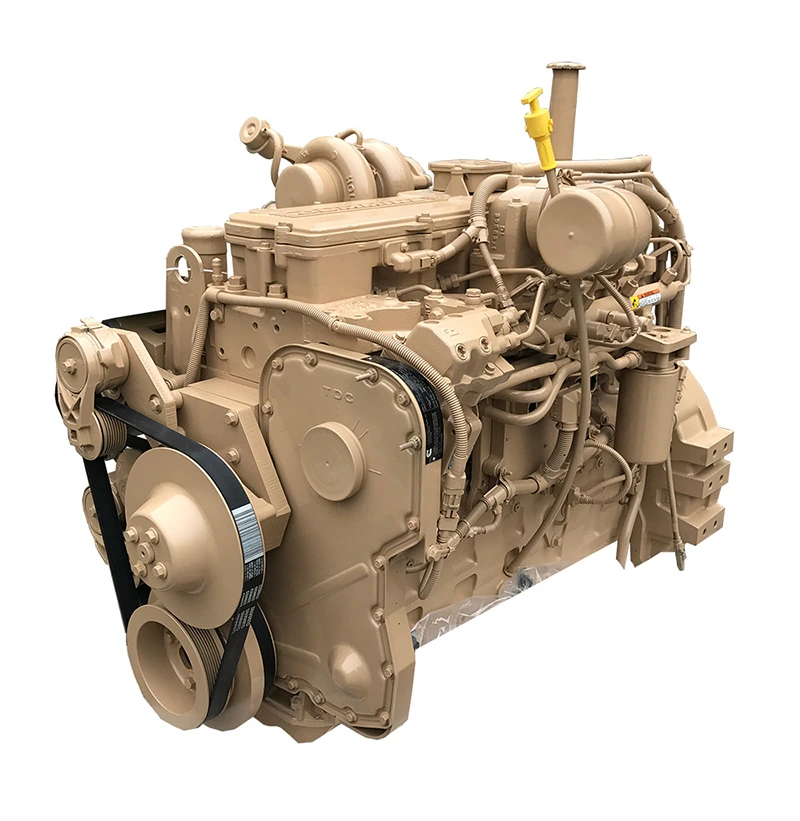
The QSB6.7 Series is suitable for buyers who need a medium-power 6-cylinder diesel platform with multiple output choices. It sits between smaller four-cylinder options and larger heavy-duty platforms, which makes it useful for many new off-highway equipment projects where power, size, and service access need to stay balanced.
Industrial Power Packages
For industrial power packages, buyers usually care about stable output, repeatable supply, and practical maintenance access. The QSB6.7 Series provides a clear base for mid-power systems where the engine must work steadily without taking too much installation space.
Construction-Site Equipment
Construction-related equipment often works with dust, vibration, heat, and changing load. A 6-cylinder layout can give smoother output than smaller platforms. For heavier load peaks, higher-output QSB6.7 options may give more working reserve, but the final model should still be checked against the real duty cycle.
Limited Maintenance Conditions
Some jobsites are not easy for service work. A cooling mismatch, wiring issue, or wrong interface can stop the full machine. This is why 6.7 Cummins Engines for Sale should be reviewed by matching support and test proof, not only by price.
What Technical Matching Should Include
Technical matching is a practical way to reduce guesswork before money, production time, and shipping cost are already committed. ANTAIOS POWER’s service process includes requirement collection, technical solution development, engine manufacturing, bench testing, equipment follow-up, and later improvement.
Input Data Review
The supplier should review rated power, rated speed, torque target, application type, installation drawings, and interface dimensions. If there is an old reference engine, clear photos and nameplate data should be sent first.
System Connection Check
The main check should include air intake, exhaust, fuel, cooling, electrical control, PTO, flywheel, and housing. One missed connection can delay assembly after arrival. In engine projects, small mismatches often create real cost.
Written Technical Confirmation
Before production, buyers should ask for written confirmation of the selected model, main dimensions, output rating, accessories, and test requirements. This gives both sides the same target and helps avoid unclear responsibility later.
| Matching Item | What Should Be Confirmed | Why It Matters |
| Rated Power and Speed | kW, hp, rpm | Keeps the engine within the equipment load range |
| Torque Point | N·m and rpm | Helps avoid weak response under working load |
| Overall Dimensions | Length, width, height, weight | Reduces frame and space conflicts |
| Flywheel and Housing | SAE size, coupling needs | Affects direct installation |
| Cooling Layout | Fan, radiator, pipe direction | Controls heat during long operation |
| Electrical System | Harness, sensors, control panel | Prevents startup and signal issues |
| Test Report | Power, torque, temperature, pressure data | Gives proof before shipment |
Why Bench Testing Matters Before Shipment
A matched engine still needs test proof. Bench testing allows the engine to be checked as an independent assembly before it is shipped. For overseas buyers, this is important because repair after arrival takes time, and returning a large engine is rarely practical.
Test Process and Inspection
A proper test covers preparation, engine installation, pipeline connection, wiring connection, starting, performance testing, data recording, leakage inspection, and report issue. This is more useful than a simple start-up video because it checks whether the engine can work under controlled load conditions.
Traceable Test Data
Traceability is valuable when one project uses several engines or when a later issue needs technical review. Archived data, reports, and photos help both sides check the exact engine supplied. Buyers should confirm whether the test report belongs to the same engine that will be delivered.
Warranty and Delivery Planning
For complete engines and power units, ANTAIOS POWER lists a warranty of one year or 1200 hours. General delivery for complete engines and power units is usually 15–30 days. These timeframes help buyers plan production with fewer assumptions.
Why Choose ANTAIOS POWER for a Precision-Matched QSB6.7 Series Engine
ANTAIOS POWER is suitable for buyers who are comparing 6.7 Cummins Engines for Sale and also want to reduce project risk. Its company background shows long-term work in off-highway diesel engine export and technical matching.
Technical Selection Before Quotation
A responsible selection process should start with working condition, installation limit, power need, and interface detail. Price is important, but it should follow the technical match. This helps the buyer avoid choosing an engine that looks correct but creates work during assembly.
Recommended Buyer Fit
The QSB6.7 Series is suitable for new equipment builders, industrial project buyers, and service companies that need stable mid-power diesel packages. The value is not only the engine itself, but also the configuration review, testing confirmation, and delivery support around it.
Clear Next Step
For buyers reviewing 6.7 Cummins Engines for Sale, the next step is to prepare target power, rated speed, application, installation space, photos, and target quantity. ANTAIOS POWER can review the configuration, check feasibility, and provide a matched option. Buyers can contact ANTAIOS POWER before finalizing the equipment design.
FAQ
Q: Are 6.7 Cummins Engines for Sale all compatible with the same equipment?
A: No. The same 6.7L displacement can have different power ratings, speeds, torque points, accessories, and interfaces. Dimensions, cooling layout, flywheel housing, PTO, and electrical system still need to be checked.
Q: Is the QSB6.7 Series suitable for new equipment projects?
A: Yes. The QSB6.7 Series is suitable for many mid-power off-highway equipment projects, especially when buyers need a 6-cylinder diesel platform with technical matching before production.
Q: What should be prepared before asking for a quote?
A: Buyers should prepare required power, rated speed, equipment type, working condition, installation drawings or photos, interface requirements, and delivery plan. If there is an old reference engine, a nameplate photo and layout photos are also helpful.
Recent Post




Related Products
Best-selling Products

912/W Series
The 912 series engine is an air-cooled diesel engine with a power range of 14-76 kW and a speed range of 1500-2500 rpm. This series of engines offers a variety of 2, 3, 4, and 6-cylinder options.
The 912W series is an upgraded version of the 912 series. To better suit the underground mining working environment, the 912W series features improved engine emissions.
Over the past decade, ANTAIOS' 912 series diesel engines have been exported to more than 100 countries. This product is mainly used in construction machinery, industrial and agricultural fields.

914 Series
The 914 series diesel engine is commonly used in underground mining environments. This air-cooled engine has a power range of 41-141 kW and a speed range of 1500-2500 rpm. It is available in both naturally aspirated and turbocharged versions to meet your different needs.
Unlike most 914 series engines produced in Chinese factories, ANTAIOS provides genuine German parts for its 914 series engines. This ensures engine quality while offering you a lower price than European brands.

2012 Series
The 2012 series engines are water-cooled engines manufactured by DEUTZ of Germany. This engine series is widely used in the fields of construction and generation. Available in both 4-cylinder and 6-cylinder configurations, common models include the BF4M2012, BF4M2012C, and BF6M2012C. If your equipment is powered by a DEUTZ 2012 series engine, ANTAIOS can provide you with suitable replacement solutions.
Our 2012 series diesel engines cover a power range of 75–155 kW, with speeds reaching 1500–2500 rpm. If you have customized requirements, we can also provide optional configurations, such as the cooling system, tailored to your specific needs

TCD2012/2013 Series
The TCD2012/2013 series is a high-pressure common rail, water-cooled diesel engine. Compared with the standard versions, this engine offers higher emission standards, making it more suitable for applications with stricter emission requirements. In past equipment applications, it has been widely used in underground mining operations.
The TCD2012/2013 series engines supplied by ANTAIOS typically have a delivery time of about one month. If the configuration requirements are relatively simple, the delivery time can sometimes be shortened to around 10 days. Since the TCD2012 series engines provided by ANTAIOS are custom-built, they are not kept in stock. All engines are scheduled for production after your order is placed.

1015 Series
The DEUTZ 1015 series engine is a large water-cooled engine, available in both 6-cylinder and 8-cylinder configurations. Unlike DEUTZ’s other 4-cylinder or 6-cylinder water-cooled engines, this engine features a V-type cylinder arrangement, significantly reducing the space required for installation.
The BFM1015 engines supplied by ANTAIOS are produced by reputable manufacturers in China. These engines are typically used in specialized equipment, where performance requirements are more demanding. Before delivery, each engine undergoes bench testing in accordance with original factory standards, along with additional testing based on specific requirements, to ensure that the engine we provide fully meets your application needs.

TCD2015 Series
The TCD2015 series engine is a V-type, 4-stroke, water-cooled diesel engine. This engine is available in V6 and V8 models, with power outputs ranging from 240-500 kW and a common operating speed of 2100 rpm. It meets Euro III emission standards and above. This engine is widely used in construction machinery, generator sets, mining equipment, marine power, and oil and gas equipment.
In addition to customizable configurations, ANTAIOS also offers custom paint colors. Unless otherwise specified, we generally offer gray paint.