
SOBRE NOSOTROS
Beijing Antaios Technology Co., Ltd. se especializa en soluciones de potencia de motores para maquinaria de construcción pequeña y mediana. Con 10 años de experiencia, ofrecemos soluciones personalizadas y rigurosas pruebas en fábrica, con informes completos y datos trazables para garantizar una calidad confiable.
SOLICITE UN PRESUPUESTO GRATUITO

¿Un motor Cummins 6.7 compatible con otros motores cumple con los requisitos de emisiones locales?
-
 autor
autor - 20 de agosto
 autor
autor 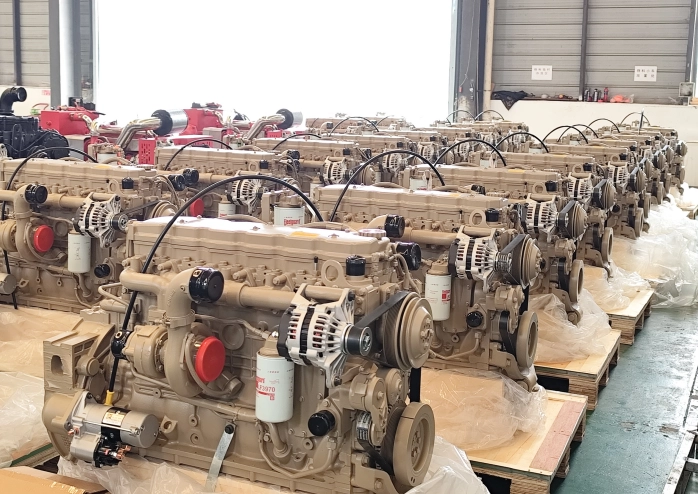
Una máquina puede superar todas las pruebas de ajuste mecánico y aun así fallar en la que detiene el proyecto: las emisiones. Los soportes encajan, la potencia parece correcta, pero el motor puede no cumplir con la normativa del lugar donde se utilizará el equipo. Por eso, al elegir un motor Cummins 6.7 para maquinaria todoterreno nueva, se debe considerar el mercado de destino, no el compartimento del motor.
En PODER DE ANTAIOSSuministramos motores diésel recién ensamblados para aplicaciones fuera de carretera y tratamos cada proyecto como un trabajo a medida, no como una simple venta de un modelo. Revisamos la potencia, la velocidad, las interfaces, la refrigeración, el diseño del escape, el espacio de instalación y las condiciones de funcionamiento. Puede encontrar más información sobre nuestro enfoque en la Compañía ANTAIOS POWER perfilEl objetivo es sencillo: el motor debe adaptarse a la máquina, a la carga de trabajo y al plan de cumplimiento al mismo tiempo.
¿Qué determina si un vehículo QSB6.7 cumple con los requisitos locales de emisiones?
Antes de comparar el hardware, defina la norma que debe cumplir la máquina. El cumplimiento depende del destino, la aplicación y la evidencia requerida.
Regulaciones del mercado objetivo
Las normas para uso fuera de carretera varían según el mercado. Una configuración aceptada en un país puede requerir controles o sistemas de escape diferentes en otro, por lo que conviene definir el destino antes de que se finalice el diseño de la máquina.
Categoría de aplicación del equipo
Los equipos de construcción, minería e industria pueden seguir diferentes normativas. Un motor Cummins de 6.7 litros, elegido únicamente por su cilindrada y potencia nominal, aún así podría no ser adecuado para la aplicación final.
Evidencia de cumplimiento requerida
Pregunte cuál es la configuración exacta para la que está diseñada y qué documentos la acompañan. Los datos de prueba y la certificación reglamentaria están relacionados, pero no son intercambiables.
¿Qué características del motor Cummins 6.7 son las más importantes para el rendimiento en cuanto a emisiones?
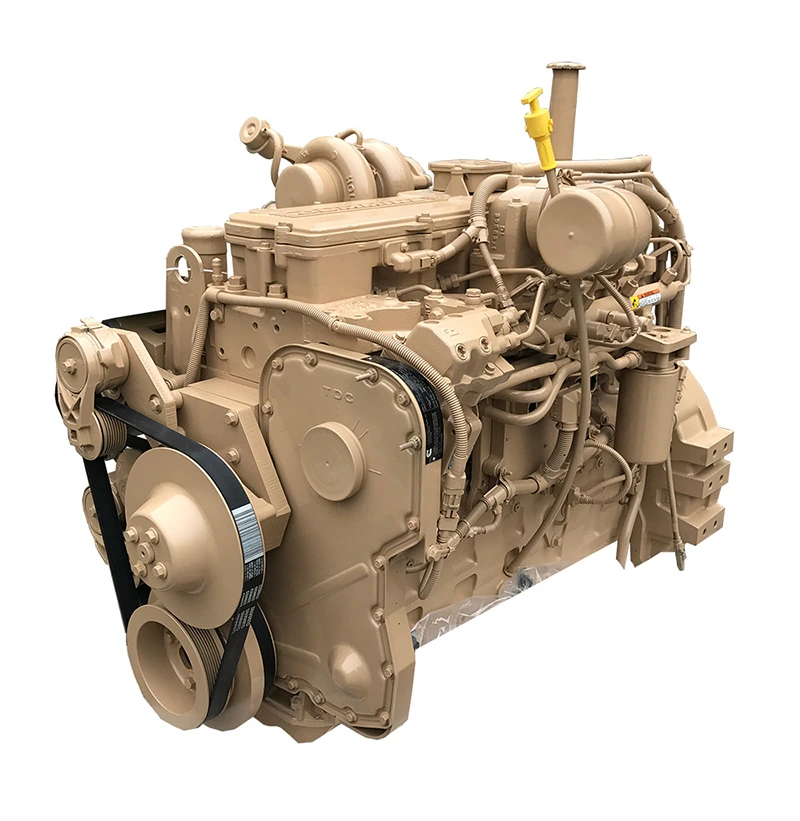
La plataforma QSB6.7 utiliza un motor de seis cilindros en línea de 6,7 litros, con un diámetro de 107 mm, una carrera de 124 mm, intercooler turboalimentado e inyección common-rail de alta presión. Estas características permiten un control preciso de la combustión, pero el resultado aún depende de la calibración y la configuración del sistema de escape.
Inyección common-rail de alta presión
La inyección common-rail permite un control más preciso de la cantidad y la sincronización del combustible a medida que cambia la carga. Esto es importante en equipos donde el motor rara vez permanece en un mismo punto de funcionamiento durante mucho tiempo.
Intercooler turboalimentado
El flujo de aire y la temperatura de la carga afectan la calidad de la combustión, el humo, la respuesta y la carga térmica. La sobrealimentación, el intercooler, la inyección de combustible y la refrigeración deben funcionar como un conjunto integrado.
Calibración de potencia y par

El Serie ANTAIOS QSB6.7 Ofrece varias clasificaciones, de modo que la salida se puede ajustar al perfil de carga real en lugar de simplemente elegir el número más alto.
| Modelo QSB6.7 | Potencia nominal | Velocidad nominal | Par máximo |
| QSB6.7-C130-30 | 99 kW | 2200 rpm | 580 N·m a 1400 rpm |
| QSB6.7-C155-30 | 116 kW | 2000 rpm | 622 N·m a 1500 rpm |
| QSB6.7-C220-30 | 164 kW | 2200 rpm | 949 N·m a 1500 rpm |
| QSB6.7-C260-30 | 194 kW | 2200 rpm | 990 N·m a 1500 rpm |
¿Cómo debe adaptarse la configuración de emisiones a su mercado?
La compatibilidad va más allá de una simple verificación dimensional. Un motor Cummins de 6.7 litros puede requerir una combinación específica de ajustes de control, componentes del sistema de escape y modificaciones en la instalación, adaptada al mercado.
Selección del sistema de postratamiento
La disposición del sistema de escape requerida depende de la normativa aplicable y de la configuración del motor. También puede modificar el recorrido, el aislamiento térmico, el acceso para el mantenimiento y el espacio disponible.
Calibración de la ECU y del sistema de combustión
La potencia, el par motor, la estrategia de inyección y la gestión del aire están interrelacionados. Modificar uno sin comprobar los demás puede provocar una respuesta deficiente, humo o un comportamiento débil bajo carga.
Integración de admisión y escape
Unos pocos centímetros pueden convertirse en un verdadero problema de ingeniería. Durante el diseño de la máquina, se deben verificar la restricción de admisión, la posición del escape, la disposición del radiador, el trazado de las mangueras y las estructuras cercanas.
¿Qué debe permanecer igual, más allá del cumplimiento de las normas de emisiones?
La idoneidad para cumplir con las normas de emisiones no compensa una mala adaptación mecánica. El motor y la máquina deben seguir funcionando como un conjunto.
Compatibilidad de potencia y par motor
No compare únicamente la potencia máxima. Verifique la velocidad nominal, el par a las rpm de funcionamiento y el patrón de carga al que estará sometido el equipo.
Compatibilidad de interfaz mecánica
Confirme el volante, la carcasa del volante, la interfaz SAE, los puntos de montaje, las necesidades de la toma de fuerza (PTO) y las posiciones de conexión antes de la producción.
Compatibilidad de refrigeración e instalación
Las dimensiones de referencia de la base para la serie QSB6.7 son 1150 × 810 × 910 mm, con un peso neto nominal de 520 kg, sin incluir el ventilador ni el radiador. Durante la instalación, se debe prever espacio suficiente para los componentes de refrigeración, el escape, las mangueras, los mazos de cables y el mantenimiento.
¿Qué deben verificar los compradores antes de pedir un QSB6.7 compatible?
Para un nuevo programa de equipamiento, es fundamental resolver las dudas sobre emisiones y compatibilidad antes de realizar la orden de compra. Un motor Cummins de 6.7 litros debe estar sujeto a un acuerdo técnico por escrito, no a una descripción de modelo genérica.
Datos del motor y del equipo
Prepare la potencia objetivo, la velocidad nominal, el tipo de equipo, los planos de instalación, las dimensiones de la interfaz, el plan de refrigeración, la posición del escape y las condiciones de funcionamiento.
Documentos de emisiones y cumplimiento
Indique por escrito el país de destino y el nivel de emisiones no viales requerido. Si se exige una certificación formal, los resultados de laboratorio no deben considerarse un sustituto.
Registros de pruebas de laboratorio y trazabilidad
El Proceso de servicio de ANTAIOS POWER Utiliza un flujo de trabajo de pruebas de laboratorio definido y registros rastreables, lo que proporciona a los compradores pruebas más útiles que un simple vídeo de presentación.
| Elemento de verificación | Osciloscopio de prueba ANTAIOS POWER |
| Pruebas generales del motor | Más de 30 preguntas de examen |
| Datos de rendimiento | 18 elementos de datos clave |
| Medición de contaminantes | Se pueden analizar 5 indicadores, entre ellos NOx, CO, HC y opacidad del humo. |
| Verificación de datos | Los datos del dinamómetro y los datos de los sensores del motor se pueden cotejar. |
¿Por qué trabajar con ANTAIOS POWER para un proyecto QSB6.7 compatible?
Un proveedor técnico aporta valor añadido cuando el motor se considera parte de la máquina, en lugar de una caja con una etiqueta de precio.
Coincidencia de productos QSB6.7
ANTAIOS POWER puede adaptar la potencia nominal QSB6.7 al equipo en lugar de imponer una potencia fija. La potencia nominal, la velocidad y el par varían lo suficiente como para que la selección sea una verdadera decisión de ingeniería.
Proceso de verificación técnica
El flujo de trabajo abarca la recopilación de requisitos, la revisión de la configuración, las comprobaciones de compatibilidad, el acuerdo técnico, la producción, las pruebas del motor, la inspección y la entrega.
Consulta y confirmación del proyecto
Enviar el mercado de destinoPara obtener información sobre el nivel de emisiones requerido, el tipo de equipo, la potencia y velocidad objetivo, la información de instalación y las condiciones de trabajo, póngase en contacto con el servicio técnico de ANTAIOS POWER. El motor Cummins 6.7 adecuado debe integrarse perfectamente en la máquina, no simplemente encajar entre los raíles del bastidor.
Conclusión
Un motor Cummins 6.7 compatible debe evaluarse considerando más que sus dimensiones, potencia o un nombre de modelo conocido. Nuestro análisis demuestra que una decisión de compra más acertada se basa en cuatro factores: la máquina en sí, el ciclo de trabajo en el que operará, las normativas locales sobre emisiones y la documentación que acompaña al motor.
Una vez acordados estos factores antes de la producción, el cumplimiento normativo se convierte en un factor de diseño para equipos de alta calidad, en lugar de un problema de última hora. Ese es el verdadero valor de la compatibilidad técnica: menos suposiciones, menos sorpresas y una máquina lista para su mercado.
Preguntas frecuentes
P: ¿Todos los motores Cummins de 6.7 litros utilizan la misma configuración de emisiones?
R: No. Los motores de la misma cilindrada pueden tener diferentes especificaciones, calibraciones y configuraciones específicas para cada aplicación. Confirme las especificaciones exactas, los requisitos del destino, el sistema de escape y la documentación suministrada antes de realizar el pedido.
P: ¿Es suficiente con que coincida la potencia nominal al seleccionar un QSB6.7 para equipos nuevos?
R: No. También necesitamos verificar la velocidad nominal, la curva de par, el volante y la carcasa, los puntos de montaje, la refrigeración, el diseño del escape, los controles eléctricos, el espacio de instalación, así como el paquete de emisiones requerido.
P: ¿Pueden las pruebas en banco demostrar que un motor cumple con la normativa legal de mi mercado?
A: Las pruebas de laboratorio permiten comprobar el rendimiento de un producto y verificar las emisiones relevantes. Sin embargo, en muchos países, las pruebas de emisiones deben estar certificadas o aprobadas por la legislación local. Verifique tanto la evidencia técnica como los documentos normativos requeridos.
Publicación reciente




Productos relacionados
Productos más vendidos

Serie 912/W
El motor de la serie 912 es un motor diésel refrigerado por aire con una potencia de 14 a 76 kW y un régimen de revoluciones de 1500 a 2500 rpm. Esta serie ofrece diversas opciones de 2, 3, 4 y 6 cilindros.
La serie 912W es una versión mejorada de la serie 912. Para adaptarse mejor al entorno de trabajo de la minería subterránea, la serie 912W presenta menores emisiones.
Durante la última década, los motores diésel de la serie 912 de ANTAIOS se han exportado a más de 100 países. Este producto se utiliza principalmente en maquinaria de construcción, así como en los sectores industrial y agrícola.

Serie 914
El motor diésel de la serie 914 se utiliza habitualmente en entornos mineros subterráneos. Este motor refrigerado por aire ofrece una potencia de entre 41 y 141 kW y un régimen de revoluciones de entre 1500 y 2500 rpm. Está disponible en versiones atmosféricas y turboalimentadas para adaptarse a sus diferentes necesidades.
A diferencia de la mayoría de los motores de la serie 914 fabricados en China, ANTAIOS utiliza repuestos originales alemanes para sus motores de la serie 914. Esto garantiza la calidad del motor y le ofrece un precio inferior al de las marcas europeas.

Serie 2012
Los motores de la serie 2012 son motores refrigerados por agua fabricados por DEUTZ de Alemania. Esta serie de motores se utiliza ampliamente en los sectores de la construcción y la generación de energía. Disponibles en configuraciones de 4 y 6 cilindros, los modelos más comunes incluyen el BF4M2012, el BF4M2012C y el BF6M2012C. Si su equipo utiliza un motor DEUTZ de la serie 2012, ANTAIOS puede proporcionarle soluciones de reemplazo adecuadas.
Nuestros motores diésel de la serie 2012 cubren un rango de potencia de 75 a 155 kW, con velocidades de hasta 1500 a 2500 rpm. Si tiene requisitos específicos, también podemos ofrecerle configuraciones opcionales, como el sistema de refrigeración, adaptadas a sus necesidades.

Serie TCD2012/2013
La serie TCD2012/2013 es un motor diésel common rail de alta presión y refrigeración por agua. En comparación con las versiones estándar, este motor ofrece estándares de emisiones más elevados, lo que lo hace más adecuado para aplicaciones con requisitos de emisiones más estrictos. Anteriormente, se ha utilizado ampliamente en operaciones mineras subterráneas.
Los motores de la serie TCD2012/2013 suministrados por ANTAIOS tienen un plazo de entrega aproximado de un mes. Si los requisitos de configuración son relativamente sencillos, el plazo de entrega puede reducirse a unos 10 días. Dado que los motores de la serie TCD2012 suministrados por ANTAIOS se fabrican a medida, no se mantienen en stock. Todos los motores se programan para su producción una vez realizado el pedido.

Serie 1015
El motor DEUTZ serie 1015 es un motor grande refrigerado por agua, disponible en configuraciones de 6 y 8 cilindros. A diferencia de otros motores refrigerados por agua de 4 o 6 cilindros de DEUTZ, este motor cuenta con una disposición de cilindros en V, lo que reduce significativamente el espacio necesario para su instalación.
Los motores BFM1015 suministrados por ANTAIOS son fabricados por reconocidos fabricantes en China. Estos motores se utilizan habitualmente en equipos especializados, donde los requisitos de rendimiento son más exigentes. Antes de la entrega, cada motor se somete a pruebas en banco de acuerdo con los estándares originales de fábrica, además de pruebas adicionales basadas en requisitos específicos, para garantizar que el motor que proporcionamos cumpla plenamente con las necesidades de su aplicación.

Serie TCD2015
El motor de la serie TCD2015 es un motor diésel de cuatro tiempos, refrigerado por agua y en V. Está disponible en versiones V6 y V8, con potencias que oscilan entre 240 y 500 kW y una velocidad de funcionamiento habitual de 2100 rpm. Cumple con la normativa de emisiones Euro III y superiores. Este motor se utiliza ampliamente en maquinaria de construcción, grupos electrógenos, equipos de minería, sistemas de propulsión marina y equipos para la industria del petróleo y el gas.
Además de las configuraciones personalizables, ANTAIOS también ofrece colores de pintura a medida. Salvo que se especifique lo contrario, generalmente ofrecemos pintura gris.