ABOUT US
Beijing Antaios Technology Co., Ltd. specializes in engine power solutions for small and medium‑sized construction machinery. With 10 years of expertise, we provide customized solutions and strict factory bench testing with complete test reports and traceable data to ensure reliable quality.
GET A FREE QUOTE

Can a Same-Fit 6.7 cummins engine Meet Your Local Emission Requirements?
-
 author
 - 20,August
 author
A machine can pass every mechanical fit check and still fail the one that stops the project: emissions. The mounts line up, the power looks right, yet the engine may not match the rule where the equipment will work. That is why choosing a 6.7 cummins engine for new off-highway equipment should start with the destination market, not the engine bay.
At ANTAIOS POWER, we supply newly assembled diesel engines for off-highway applications and treat each project as a matching job, not a model-number sale. We review output, speed, interfaces, cooling, exhaust layout, installation space, and duty conditions. More about our approach is available on the ANTAIOS POWER company profile. The goal is simple: the engine must fit the machine, the workload, and the compliance plan at the same time.
What Determines Whether a QSB6.7 Meets Local Emission Requirements?
Before comparing hardware, define the rule the machine has to meet. Compliance depends on the destination, application, and evidence required.
Target Market Regulations
Non-road rules vary by market. A configuration accepted in one country may need different controls or exhaust hardware in another, so settle the destination before the machine design is frozen.
Equipment Application Category
Construction, mining, and industrial equipment can follow different compliance paths. A 6.7 cummins engine chosen only by displacement and rated power can still be wrong for the final application.
Required Compliance Evidence
Ask what the exact configuration is designed to meet and what documents come with it. Test data and regulatory certification are related, but not interchangeable.
Which 6.7 cummins engine Features Matter Most for Emission Performance?
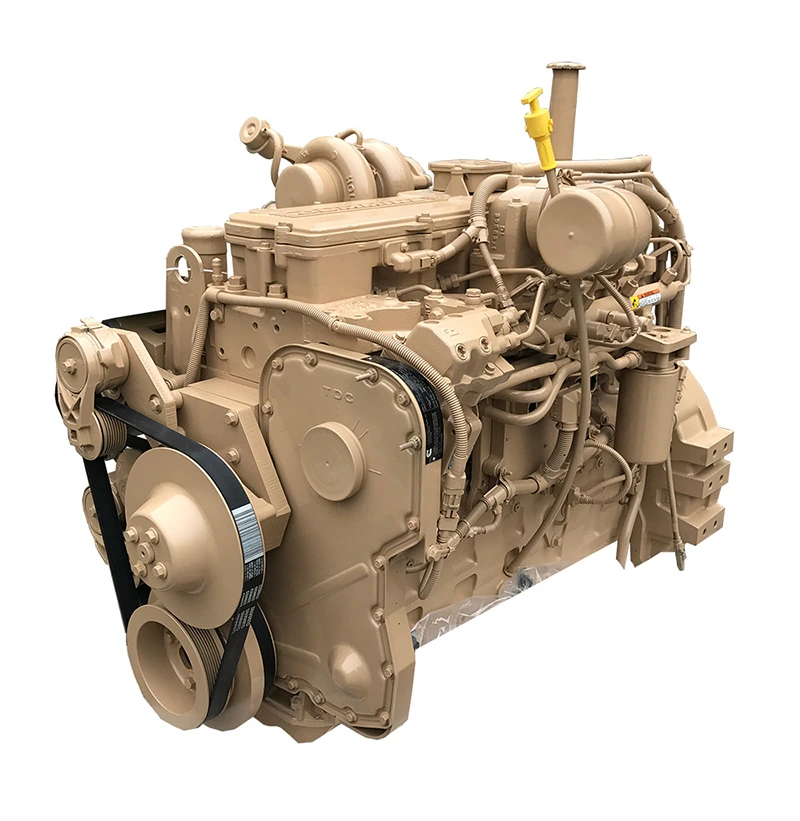
The QSB6.7 platform uses a 6.7 L inline-six layout, 107 mm bore, 124 mm stroke, turbocharged intercooling, and high-pressure common-rail injection. These features support precise combustion control, but the result still depends on calibration and exhaust configuration.
High-Pressure Common-Rail Injection
Common-rail injection gives finer control of fuel quantity and timing as load changes. That matters in equipment where the engine rarely stays at one operating point for long.
Turbocharged Intercooling
Airflow and charge temperature affect combustion quality, smoke, response, and thermal load. Turbocharging, intercooling, fueling, and cooling need to work as one package.
Power and Torque Calibration

The ANTAIOS QSB6.7 Series offers several ratings, so output can be matched to the real load profile rather than simply choosing the biggest number.
| QSB6.7 Model | Rated Power | Rated Speed | Maximum Torque |
| QSB6.7-C130-30 | 99 kW | 2200 rpm | 580 N·m @ 1400 rpm |
| QSB6.7-C155-30 | 116 kW | 2000 rpm | 622 N·m @ 1500 rpm |
| QSB6.7-C220-30 | 164 kW | 2200 rpm | 949 N·m @ 1500 rpm |
| QSB6.7-C260-30 | 194 kW | 2200 rpm | 990 N·m @ 1500 rpm |
How Should the Emission Configuration Be Matched to Your Market?
Same-fit is more than a dimensional check. A 6.7 cummins engine may need a market-specific mix of control settings, exhaust hardware, and installation changes.
Aftertreatment System Selection
The required exhaust arrangement depends on the applicable rule and engine configuration. It can also change routing, heat shielding, service access, and available space.
ECU and Combustion Calibration
Power, torque, injection strategy, and air management are linked. Changing one without checking the others can cause poor response, smoke, or weak behavior under load.
Intake and Exhaust Integration
A few centimeters can become a real engineering problem. Intake restriction, exhaust position, radiator layout, hose routing, and nearby structures should be checked during machine design.
What Must Stay Same-Fit Beyond Emission Compliance?
Emission suitability does not rescue a poor mechanical match. The engine and machine still need to work as one package.
Power and Torque Compatibility
Do not compare peak power alone. Check rated speed, torque at working rpm, and the load pattern the equipment will see.
Mechanical Interface Compatibility
Confirm the flywheel, flywheel housing, SAE interface, mounting points, PTO needs, and connection positions before production.
Cooling and Installation Compatibility
The reference base dimensions for the QSB6.7 series are 1150 × 810 × 910 mm, with a nominal net weight of 520 kg, excluding the cooling fan and radiator. Sufficient allowance must still be provided for cooling components, exhaust clearance, hoses, wiring harnesses, and maintenance space during actual installation.
What Should Buyers Verify Before Ordering a Same-Fit QSB6.7?
For a new equipment program, settle emission and fitment questions before the purchase order. A 6.7 cummins engine should be tied to a written technical agreement, not a loose model description.
Engine and Equipment Data
Prepare target power, rated speed, equipment type, installation drawings, interface dimensions, cooling plan, exhaust position, and working conditions.
Emission and Compliance Documents
State the destination country and required non-road emission level in writing. If formal certification is required, bench results should not be treated as a substitute.
Bench Test and Traceability Records
The ANTAIOS POWER service process uses a defined bench-test workflow and traceable records, giving buyers more useful evidence than a simple startup video.
| Verification Item | ANTAIOS POWER Test Scope |
| Overall engine testing | More than 30 test items |
| Performance data | 18 key data items |
| Pollutant measurement | 5 indicators can be tested, including NOx, CO, HC, and smoke opacity |
| Data checking | Dynamometer data and engine-sensor data can be cross-checked |
Why Work With ANTAIOS POWER for a Same-Fit QSB6.7 Project?
A technical supplier adds value when the engine is treated as part of the machine rather than a box with a price tag.
QSB6.7 Product Matching
ANTAIOS POWER can match the QSB6.7 rating to the equipment instead of pushing one fixed output. Rated power, speed, and torque vary enough to make selection a real engineering decision.
Technical Verification Process
The workflow covers requirement collection, configuration review, compatibility checks, technical agreement, production, engine testing, inspection, and delivery.
Project Consultation and Confirmation
Send the destination market, required emission level, equipment type, target power and speed, installation information, and working conditions through the ANTAIOS POWER technical contact. The right 6.7 cummins engine should work as part of the whole machine, not merely fit between the frame rails.
Conclusion
A same-fit 6.7 cummins engine should be judged by more than dimensions, power, or a familiar model name. Our analysis shows that a stronger buying decision is based on four factors: the machine itself, the duty cycle in which the machine will operate, the local emission regulations, and the evidence that is supplied with the engine.
Once these factors have been agreed before production, then the issue of compliance becomes a design factor of good quality equipment rather than a late stage problem. That is the real value of technical matching: fewer assumptions, fewer surprises, and a machine ready for its market.
FAQ
Q: Does every 6.7 cummins engine use the same emission configuration?
A: No. Engines within the same displacement family can use different ratings, calibrations, and application-specific configurations. Confirm the exact specification, destination requirement, exhaust arrangement, and supplied documents before ordering.
Q: Is matching rated power enough when selecting a QSB6.7 for new equipment?
A: No. We also need to check rated speed, torque curve, flywheel and housing, mounting points, cooling, exhaust layout, electrical controls, installation space, as well as the required emission package.
Q: Can bench testing prove that an engine is legally compliant in my market?
A: Bench testing can show the performance of a product and check for relevant emissions. However, in many countries the emission testing is required to be certified or approved by local law. Check both the technical evidence and the required regulatory documents.
Recent Post




Related Products
Best-selling Products

912/W Series
The 912 series engine is an air-cooled diesel engine with a power range of 14-76 kW and a speed range of 1500-2500 rpm. This series of engines offers a variety of 2, 3, 4, and 6-cylinder options.
The 912W series is an upgraded version of the 912 series. To better suit the underground mining working environment, the 912W series features improved engine emissions.
Over the past decade, ANTAIOS' 912 series diesel engines have been exported to more than 100 countries. This product is mainly used in construction machinery, industrial and agricultural fields.

914 Series
The 914 series diesel engine is commonly used in underground mining environments. This air-cooled engine has a power range of 41-141 kW and a speed range of 1500-2500 rpm. It is available in both naturally aspirated and turbocharged versions to meet your different needs.
Unlike most 914 series engines produced in Chinese factories, ANTAIOS provides genuine German parts for its 914 series engines. This ensures engine quality while offering you a lower price than European brands.

2012 Series
The 2012 series engines are water-cooled engines manufactured by DEUTZ of Germany. This engine series is widely used in the fields of construction and generation. Available in both 4-cylinder and 6-cylinder configurations, common models include the BF4M2012, BF4M2012C, and BF6M2012C. If your equipment is powered by a DEUTZ 2012 series engine, ANTAIOS can provide you with suitable replacement solutions.
Our 2012 series diesel engines cover a power range of 75–155 kW, with speeds reaching 1500–2500 rpm. If you have customized requirements, we can also provide optional configurations, such as the cooling system, tailored to your specific needs

TCD2012/2013 Series
The TCD2012/2013 series is a high-pressure common rail, water-cooled diesel engine. Compared with the standard versions, this engine offers higher emission standards, making it more suitable for applications with stricter emission requirements. In past equipment applications, it has been widely used in underground mining operations.
The TCD2012/2013 series engines supplied by ANTAIOS typically have a delivery time of about one month. If the configuration requirements are relatively simple, the delivery time can sometimes be shortened to around 10 days. Since the TCD2012 series engines provided by ANTAIOS are custom-built, they are not kept in stock. All engines are scheduled for production after your order is placed.

1015 Series
The DEUTZ 1015 series engine is a large water-cooled engine, available in both 6-cylinder and 8-cylinder configurations. Unlike DEUTZ’s other 4-cylinder or 6-cylinder water-cooled engines, this engine features a V-type cylinder arrangement, significantly reducing the space required for installation.
The BFM1015 engines supplied by ANTAIOS are produced by reputable manufacturers in China. These engines are typically used in specialized equipment, where performance requirements are more demanding. Before delivery, each engine undergoes bench testing in accordance with original factory standards, along with additional testing based on specific requirements, to ensure that the engine we provide fully meets your application needs.

TCD2015 Series
The TCD2015 series engine is a V-type, 4-stroke, water-cooled diesel engine. This engine is available in V6 and V8 models, with power outputs ranging from 240-500 kW and a common operating speed of 2100 rpm. It meets Euro III emission standards and above. This engine is widely used in construction machinery, generator sets, mining equipment, marine power, and oil and gas equipment.
In addition to customizable configurations, ANTAIOS also offers custom paint colors. Unless otherwise specified, we generally offer gray paint.