ABOUT US
Beijing Antaios Technology Co., Ltd. specializes in engine power solutions for small and medium‑sized construction machinery. With 10 years of expertise, we provide customized solutions and strict factory bench testing with complete test reports and traceable data to ensure reliable quality.
GET A FREE QUOTE

Cummins QSC8.3 Replacement Engine: How to Match It for Your Construction Equipment
-
 author
 - 1,October
 author
 An 8.3-litre six-cylinder engine is a common choice for a machine that has outgrown a smaller unit but is not ready for a larger displacement. The question is not whether a Cummins QSC8.3 engine exists. The question is whether the specific configuration you are offered will do the job your machine performs, at the speed and load it actually runs at. Matching the QSC8.3 is the same exercise as matching any replacement engine: confirm the operating point, the interface and the configuration, then verify the result before the unit is built.
This guide walks through how to match a Cummins QSC8.3 replacement engine for construction equipment. It is written for the buyer of a new, China-manufactured replacement assembly, and it leads with the bare-engine offer, which is the more common form for construction-machinery replacement.
Quick answer: match the rated power and speed of the QSC8.3 to your machine’s duty, confirm the flywheel, housing, mounts, starter voltage and cooling against your installation, then agree the configuration in a technical agreement and verify it at the bench before production.
What a QSC8.3 Replacement Engine Is
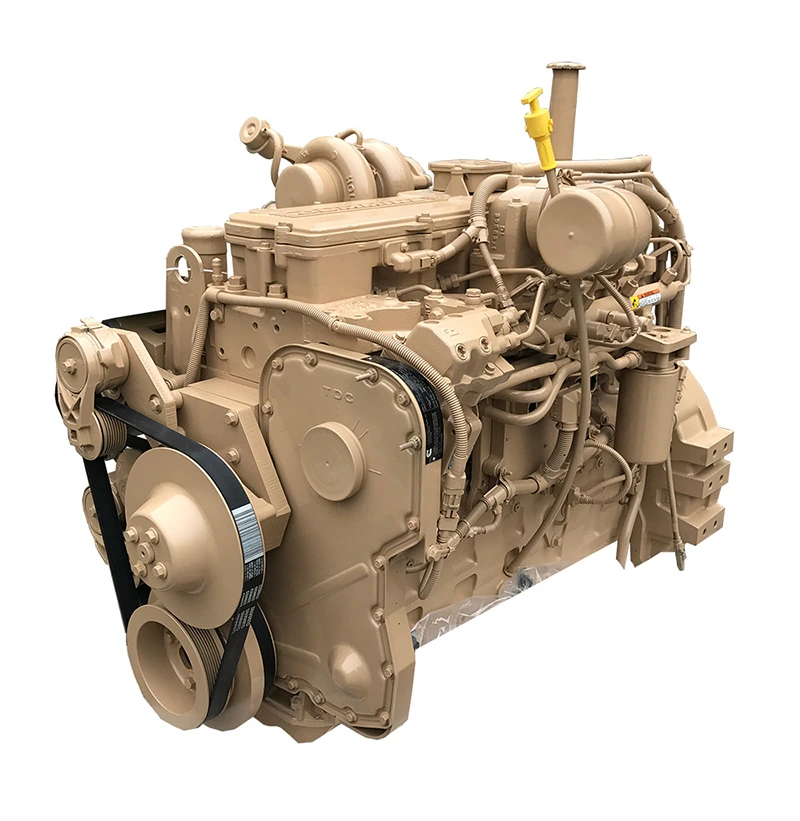
The QSC8.3 engine is a water-cooled, six-cylinder, in-line diesel engine. The documented base architecture is a turbocharged inter-cooling aspiration, a high-pressure common-rail injection system, an 8.3-litre displacement, a 114 mm bore, a 135 mm stroke and a 17.3 compression ratio. The platform is positioned for construction and industrial use, which is why it shows up as a replacement candidate for loaders, excavators and similar equipment that needs more output than a smaller engine provides.
What the model name tells you is the family and the displacement. What it does not tell you is the rated output, the rated speed, the exact interface or the configuration. Those are set by the specific model code and the agreed setup. That is the part of the purchase you need to get right.
| Documented base data | Value |
| Configuration | Six in-line cylinders, water-cooled |
| Aspiration | Turbocharged inter-cooling |
| Injection | High-pressure common rail |
| Displacement, bore and stroke | 8.3 L, 114 mm, 135 mm |
| Compression ratio | 17.3 |
Because the platform is common-rail and electronic, treat it as a distinct variant from the mechanical-injection engines of the same displacement. The matching checks are different, and the controls, sensors and wiring have to be agreed, not assumed.
Match the Rated Power and Speed to the Duty
The Cummins QSC8.3 is offered across a range of model codes, each with its own rated power, rated speed and maximum torque. Selecting the right one is a question of the machine’s duty, not of the largest number on the list.
| Model code | Rated power | Rated speed | Maximum torque |
| QSC8.3-C215-30 | 160 kW | 2200 rpm | 980 Nm at 1350 rpm |
| QSC8.3-C220-30 | 162 kW | 2200 rpm | 950 Nm at 1350 rpm |
| QSC8.3-C240-30 | 179 kW | 2200 rpm | 1040 Nm at 1350 rpm |
| QSC8.3-C260-30 | 194 kW | 2200 rpm | 1135 Nm at 1350 rpm |
| QSC8.3-C260-31 | 194 kW | 2400 rpm | 1080 Nm at 1500 rpm |
Read the Operating Point, Not Just the Peak
The machine has an operating point: the speed it runs at under normal work and the load it carries there. Match the rated power and the rated speed of the Cummins QSC8.3 to that point. A code that looks strong at its peak can still be the wrong one for the speed and duty the machine actually sees, particularly once altitude and ambient conditions are taken into account.
Keep the Torque in the Picture
Construction equipment often works at low speed and high load. The maximum torque figure, and the speed at which it occurs, matter as much as the rated power. Compare the torque behaviour with what the machine needs, rather than treating power as the only number that counts.
Do Not Average a Bigger Engine In
If the machine needs more output, that is not a reason to step up to the next displacement automatically. A correctly matched Cummins QSC8.3 code can do the job. A larger engine can introduce cooling, packaging and weight problems the machine was not designed around. Match the duty first, then choose the code.
Match the Mechanical and System Interfaces
Once the operating point is chosen, the engine has to fit the machine. For a water-cooled common-rail engine, the interface check covers the mechanical connections and the systems that surround the block.
Confirm the Mechanical Connections
The documented standard layout includes engine supports and a SAE flywheel and housing. Confirm the flywheel, the flywheel housing or bell housing, the mounting points and the connection dimensions against your machine. These are the dimensions that a displacement figure never shows.
Match the Systems Around the Block
The standard configuration carries a 12 V or 24 V starting motor, a 14 V or 28 V charging generator, an electronic or mechanical speed governor, the measuring tools and sensors, and the electrical accessories, together with the cooling fan and water radiator. Confirm the starter voltage against the machine, the cooling capacity against the enclosure and the duty, and the governing and control arrangement against the machine’s controls. Optional items such as the air cleaner, the exhaust muffler, the hydraulic oil radiator, the hydraulic pump, the clutch, the base frame and the fuel tank are added to the configuration for the specific application.
| Interface group | What to confirm |
| Operating point | Rated power and speed against the machine’s duty |
| Mechanical | Flywheel, SAE flywheel and housing, mounts and connection dimensions |
| Electrical | Starting motor voltage and charging-generator voltage |
| Cooling | Water radiator and fan capacity for the enclosure and duty |
| Control | Speed governor and control arrangement against the machine |
| Envelope | Overall size and net weight against the machine’s space |
Confirm the Configuration and Verify Before Ordering
Matching is a configuration decision, not a model selection. Once the operating point and the interfaces are agreed, the configuration is fixed in a technical agreement and verified at the bench before the engine is built.

The bench result refers to the agreed configuration and the recorded serial number. It is evidence for that setup and duty, not a statement that every installation will behave the same way once fitted to your machine.
Agree the Configuration in Writing
Confirm the selected model code, the rated output and speed, the starter voltage, the cooling arrangement and any optional items, and record them in a technical agreement. The serial number stays in that agreement so the built unit can be tied back to it.
Verify Against the Agreed Setup
After the engine is configured, it is tested on a bench against the agreed technical configuration and acceptance criteria. The engine bench-testing process documents the engine-level evidence. Keep that record with the technical agreement so the result can be read against the exact configuration.
Keep Engine-Level and Machine-Level Separate
A bench result is engine-level evidence. The complete machine still has to be installed, commissioned and checked under its own working conditions. Package losses, cooling, altitude, ambient and the machine’s load all affect the final behaviour. Do not let a good bench result stand in for machine acceptance.
Within the Cummins-platform replacement range, the QSC8.3 is one of the families reviewed for construction and industrial replacement. The goal is a configuration you can verify against your machine, not a model you have to assume will fit.
Conclusion
Matching a Cummins QSC8.3 replacement engine for construction equipment comes down to three checks: the operating point, the interface and the configuration. Read the rated power, speed and torque against the machine’s duty, confirm the flywheel, housing, mounts, starter voltage and cooling against the installation, then agree the configuration in a technical agreement and verify it at the bench before production.
To have a QSC8.3 configuration matched and confirmed, contact ANTAIOS POWER with the machine model, the required operating point and the nameplate or configuration data of the engine being replaced. The team can review the match through the application-specific technical matching process and confirm the agreed technical agreement before the engine is built.
Frequently Asked Questions
Is the QSC8.3 a good fit for construction equipment by default?
No engine is a default fit. The Cummins QSC8.3 is a water-cooled, six-cylinder, common-rail platform positioned for construction and industrial use, so it is a strong candidate for many machines. Whether the specific code and configuration fit your machine depends on the duty, the interface and the agreed setup, which have to be checked item by item.
How do I choose between the QSC8.3 model codes?
Choose by the machine’s operating point, not by the largest rating. Compare the rated power, the rated speed and the torque behaviour of each code with the speed and load the machine actually runs at. The code that matches the duty is the one to agree, and the configuration is then fixed in the technical agreement.
Does a bench test prove the QSC8.3 will perform in my machine?
A bench test verifies the engine against the agreed technical configuration and acceptance criteria, and it is tied to the recorded serial number. It is engine-level evidence for that setup and duty. Machine acceptance still requires installation, commissioning and checking under the machine’s own working conditions.
What should I send to request a QSC8.3 match?
Send the machine model and the required operating point, the nameplate or configuration data of the engine being replaced, photos of the engine and the mounting area, and any known change to the installation. That record lets the configuration be traced, any difference identified and the technical agreement confirmed before a quote is finalised.
Recent Post



Related Products
Best-selling Products

912/W Series
The 912 series engine is an air-cooled diesel engine with a power range of 14-76 kW and a speed range of 1500-2500 rpm. This series of engines offers a variety of 2, 3, 4, and 6-cylinder options.
The 912W series is an upgraded version of the 912 series. To better suit the underground mining working environment, the 912W series features improved engine emissions.
Over the past decade, ANTAIOS' 912 series diesel engines have been exported to more than 100 countries. This product is mainly used in construction machinery, industrial and agricultural fields.

914 Series
The 914 series diesel engine is commonly used in underground mining environments. This air-cooled engine has a power range of 41-141 kW and a speed range of 1500-2500 rpm. It is available in both naturally aspirated and turbocharged versions to meet your different needs.
Unlike most 914 series engines produced in Chinese factories, ANTAIOS provides genuine German parts for its 914 series engines. This ensures engine quality while offering you a lower price than European brands.

2012 Series
The 2012 series engines are water-cooled engines manufactured by DEUTZ of Germany. This engine series is widely used in the fields of construction and generation. Available in both 4-cylinder and 6-cylinder configurations, common models include the BF4M2012, BF4M2012C, and BF6M2012C. If your equipment is powered by a DEUTZ 2012 series engine, ANTAIOS can provide you with suitable replacement solutions.
Our 2012 series diesel engines cover a power range of 75–155 kW, with speeds reaching 1500–2500 rpm. If you have customized requirements, we can also provide optional configurations, such as the cooling system, tailored to your specific needs

TCD2012/2013 Series
The TCD2012/2013 series is a high-pressure common rail, water-cooled diesel engine. Compared with the standard versions, this engine offers higher emission standards, making it more suitable for applications with stricter emission requirements. In past equipment applications, it has been widely used in underground mining operations.
The TCD2012/2013 series engines supplied by ANTAIOS typically have a delivery time of about one month. If the configuration requirements are relatively simple, the delivery time can sometimes be shortened to around 10 days. Since the TCD2012 series engines provided by ANTAIOS are custom-built, they are not kept in stock. All engines are scheduled for production after your order is placed.

1015 Series
The DEUTZ 1015 series engine is a large water-cooled engine, available in both 6-cylinder and 8-cylinder configurations. Unlike DEUTZ’s other 4-cylinder or 6-cylinder water-cooled engines, this engine features a V-type cylinder arrangement, significantly reducing the space required for installation.
The BFM1015 engines supplied by ANTAIOS are produced by reputable manufacturers in China. These engines are typically used in specialized equipment, where performance requirements are more demanding. Before delivery, each engine undergoes bench testing in accordance with original factory standards, along with additional testing based on specific requirements, to ensure that the engine we provide fully meets your application needs.

TCD2015 Series
The TCD2015 series engine is a V-type, 4-stroke, water-cooled diesel engine. This engine is available in V6 and V8 models, with power outputs ranging from 240-500 kW and a common operating speed of 2100 rpm. It meets Euro III emission standards and above. This engine is widely used in construction machinery, generator sets, mining equipment, marine power, and oil and gas equipment.
In addition to customizable configurations, ANTAIOS also offers custom paint colors. Unless otherwise specified, we generally offer gray paint.