ABOUT US
Beijing Antaios Technology Co., Ltd. specializes in engine power solutions for small and medium‑sized construction machinery. With 10 years of expertise, we provide customized solutions and strict factory bench testing with complete test reports and traceable data to ensure reliable quality.
GET A FREE QUOTE

QSB6.7 Power Ratings Explained: How to Select a Same-Fit 6.7 Cummins Motor for a New Machine
-
 author
 - 24,July
 author
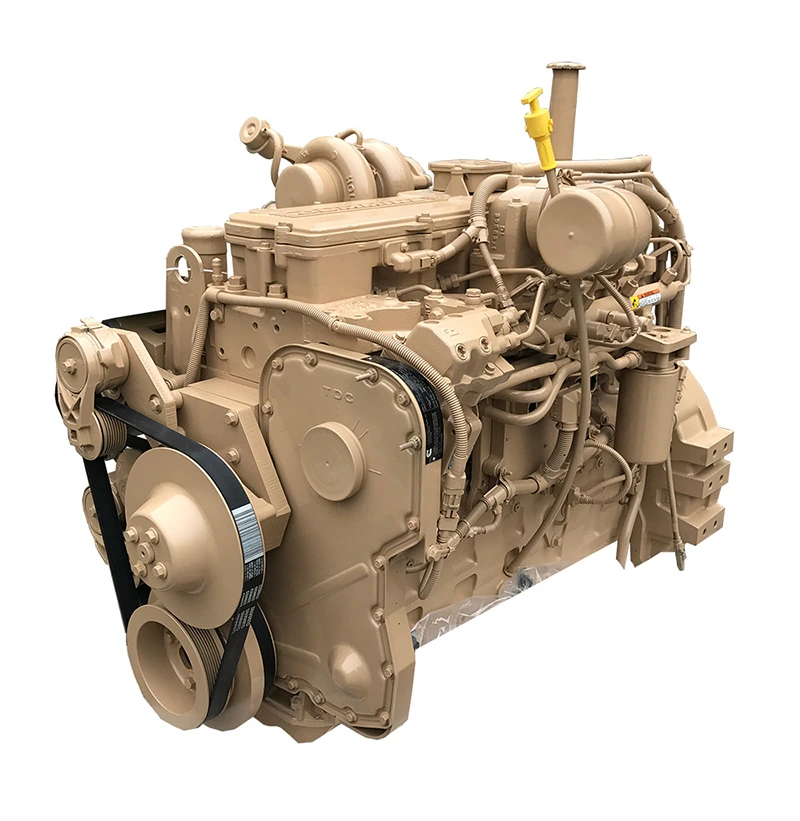
Many of the most reliable machines are started with a crucial decision that takes place before the walls are closed on the rest of the build-out. The choice of an appropriate drivetrain engine to match the design’s requirements for power, rpm, cooling, and attachment points is determinative. A same-fit 6.7 cummins motor should ‘belong’ in the finished machine, not have been tacked on after the fact.
At ANTAIOS POWER, that is where each new-equipment project begins. The company supplies brand-new, zero-hour diesel power solutions and approaches selection as engineering work. Its QSB6.7 Series offers six ratings from 130 to 260 hp, giving you room to choose without buying power the machine cannot use.
What Do QSB6.7 Power Ratings Mean for a New Machine?
Read power, rated speed, and maximum torque together. Each answers a different design question.
Rated Power Output
Rated power is declared output at a specified speed. This series spans 99 to 194 kW, or 130 to 260 hp.
| Model | Rated Power | Rated Speed | Maximum Torque and Speed |
| QSB6.7-C130-30 | 99 kW / 130 hp | 2,200 rpm | 580 N·m at 1,400 rpm |
| QSB6.7-C155-30 | 116 kW / 155 hp | 2,000 rpm | 622 N·m at 1,500 rpm |
| QSB6.7-C215-31 | 160 kW / 215 hp | 2,500 rpm | 888 N·m at 1,500 rpm |
| QSB6.7-C220-30 | 164 kW / 220 hp | 2,200 rpm | 949 N·m at 1,500 rpm |
| QSB6.7-C260-30 | 194 kW / 260 hp | 2,200 rpm | 990 N·m at 1,500 rpm |
| QSB6.7-C260-31 | 194 kW / 260 hp | 2,400 rpm | 990 N·m at 1,500 rpm |
Rated Engine Speed
Rated speed matters for pumps, couplings, and mechanical transmissions. The 260 hp versions are rated at 2,200 and 2,400 rpm. That 200 rpm gap matters once the drive ratio is fixed.
Maximum Torque Point
Maximum torque indicates response as resistance rises. These peaks occur at 1,400 or 1,500 rpm. Compare them with startup resistance, hydraulic demand, and brief load spikes.
Skip the Spec Sheet Trap: How We Streamline QSB6.7 Selection
When confronted with a dense matrix of engine configurations, the natural instinct is to start agonizing over paper specs. But in our actual day-to-day operations at ANTAIOS POWER, we’ve found that staring at data charts is rarely the best way to make a decision. Instead of forcing you to navigate complex power tiers, we handle procurement based on two highly practical, real-world scenarios.
The Drop-In Replacement (Existing Equipment)
If your machine is already running this specific engine model, the entire process is incredibly straightforward. We aren’t going to ask you to rethink your power requirements or evaluate new torque curves. Just snap a photo of your old engine’s nameplate and tell us how it’s currently running. We use that exact baseline to replicate your setup. In this scenario, our only priority is guaranteeing a 100% seamless fit with your current mounting layout, cooling system, and transmission. It’s all about swapping the unit efficiently, minimizing your downtime, and eliminating mechanical risks.
First-Time Integration (New Equipment)
If you are outfitting a brand-new machine, there is absolutely no reason to lose sleep over a minor 5-horsepower difference between two sub-models. We keep it simple. Just tell us your intended application, your target power, and your required operating speed. That’s it. Our engineering team takes those three data points and essentially reverse-engineers the perfect fit from the QSB6.7 parameters. We digest all the complex technical variables internally—from duty cycle mapping to torque redundancy—and hand you a finalized solution built specifically for your real-world load.
Sourcing an industrial engine shouldn’t feel like taking a math exam. Bring us your operational demands, and let our field-tested engineering experience eliminate the trial and error.
How Should a Same-Fit 6.7 Cummins Motor Match the Duty Cycle?
Catalog figures describe capability; the duty cycle describes the job. Compare both before finalizing the engine bay and supporting systems.
Continuous Load Profile
Record normal demand and daily operating hours. Long high-load periods create more heat than short cycles. Select enough steady output and cooling capacity.
Peak Torque Requirement
Startup, pressure changes, and sudden resistance create load spikes. Compare each with the torque curve. More horsepower cannot cure poor response at working rpm.
Operating Speed Window
List minimum, normal, and maximum speeds. Compare them with the engine and driven component. Keep reserve for fan demand and site conditions, but avoid needless excess.
What Must Be Matched beyond the Power Rating?

A same-fit 6.7 cummins motor also needs physical and system compatibility. Correct power cannot rescue a misplaced coupling or undersized radiator. Settle both on drawings first.
Installation Envelope and Mounting Geometry
Confirm dimensions, weight, mounting points, service access, and lifting clearance. Filters and belts need room. Otherwise, routine service may require dismantling another machine part.
Flywheel, Housing, and PTO Interfaces
Check flywheel size, housing, coupling, rotation, and PTO arrangement. These connect engine output to the working system. Rely on approved dimensions, not displacement.
Cooling, Airflow, and Electrical Integration
Match radiator capacity, fan direction, pipe routing, intake restriction, exhaust routing, harnesses, sensors, and control signals. Use this checklist:
| Review Item | Project Input | Evidence before Production |
| Power and speed | Load calculation and working rpm | Approved rating sheet |
| Mechanical fit | Layout drawing and interface sizes | Dimension drawing |
| Cooling | Heat load, radiator, fan, and airflow | Cooling plan |
| Electrical system | Voltage, harness, sensors, and controls | Wiring confirmation |
| Delivery test | Agreed load points and limits | Signed test requirement |
How Should a QSB6.7 Be Verified before Delivery?
Paper selection still needs proof. ANTAIOS POWER’s technical service process connects configuration review, testing, and delivery records.
Written Technical Agreement
State the model, rating, interfaces, accessories, cooling and electrical scope, and test points. Purchasing and engineering then work from one target.
Full-Load Bench Testing
A proper test covers startup, warm-up, staged loading, rated-load operation, data recording, and leakage checks. Review all measured values against agreed limits. A no-load video is not the full test.
Traceable Inspection Records
The report, unit number, photos, and data should match the engine being shipped. Future units can then follow the approved configuration.
Why Choose ANTAIOS POWER for a New QSB6.7 Project?
ANTAIOS POWER supports new equipment builders through selection, configuration checks, documented testing, and export delivery.
Application-Based Model Selection
Selection begins with power, speed, torque demand, duty cycle, and operating conditions. The QSB6.7 specification stays tied to your machine.
Customized Integration Support
Drawings and interface data are reviewed before production. Cooling, connections, options, and electrical details enter the technical agreement and inspection scope.
Direct Technical Consultation
Prepare your load calculation, working speed, peak load, duty cycle, installation drawing, cooling plan, quantity, and schedule. Then contact ANTAIOS POWER before finalizing the drawings and purchase order.
Conclusion
Choosing an engine for a new machine is really a decision about the machine’s future. The right same-fit 6.7 cummins motor brings power, speed, cooling, and mechanical interfaces into one workable package. With careful rating selection and documented testing from ANTAIOS POWER, you can move from design approval to commissioning with fewer surprises and greater confidence in every production unit.
FAQ
Q: Is the highest power rating always the best choice for a new machine?
A: No. ANTAIOS POWER matches the same-fit 6.7 cummins motor to load, speed, torque, cooling, and interfaces. Excess power may add cost without improving useful work.
Q: What information should be prepared before model selection?
A: In real-world applications, ANTAIOS POWER typically handles supply through two distinct scenarios. If you’re already running this specific engine, we simply use your old unit’s exact setup to build a matching replacement strategy. But if you are integrating this engine platform for the first time, we take a more tailored approach. You just need to share your required power, target RPM, and the equipment’s specific application, and we’ll cross-reference our performance charts to pinpoint the exact configuration for your project.
Q: What proof should be supplied before shipment?
A: ANTAIOS POWER can provide agreed technical documents, unit-linked inspection records, bench-test data, photos, and running evidence for the confirmed project scope.
Recent Post




Related Products
Best-selling Products

912/W Series
The 912 series engine is an air-cooled diesel engine with a power range of 14-76 kW and a speed range of 1500-2500 rpm. This series of engines offers a variety of 2, 3, 4, and 6-cylinder options.
The 912W series is an upgraded version of the 912 series. To better suit the underground mining working environment, the 912W series features improved engine emissions.
Over the past decade, ANTAIOS' 912 series diesel engines have been exported to more than 100 countries. This product is mainly used in construction machinery, industrial and agricultural fields.

914 Series
The 914 series diesel engine is commonly used in underground mining environments. This air-cooled engine has a power range of 41-141 kW and a speed range of 1500-2500 rpm. It is available in both naturally aspirated and turbocharged versions to meet your different needs.
Unlike most 914 series engines produced in Chinese factories, ANTAIOS provides genuine German parts for its 914 series engines. This ensures engine quality while offering you a lower price than European brands.

2012 Series
The 2012 series engines are water-cooled engines manufactured by DEUTZ of Germany. This engine series is widely used in the fields of construction and generation. Available in both 4-cylinder and 6-cylinder configurations, common models include the BF4M2012, BF4M2012C, and BF6M2012C. If your equipment is powered by a DEUTZ 2012 series engine, ANTAIOS can provide you with suitable replacement solutions.
Our 2012 series diesel engines cover a power range of 75–155 kW, with speeds reaching 1500–2500 rpm. If you have customized requirements, we can also provide optional configurations, such as the cooling system, tailored to your specific needs

TCD2012/2013 Series
The TCD2012/2013 series is a high-pressure common rail, water-cooled diesel engine. Compared with the standard versions, this engine offers higher emission standards, making it more suitable for applications with stricter emission requirements. In past equipment applications, it has been widely used in underground mining operations.
The TCD2012/2013 series engines supplied by ANTAIOS typically have a delivery time of about one month. If the configuration requirements are relatively simple, the delivery time can sometimes be shortened to around 10 days. Since the TCD2012 series engines provided by ANTAIOS are custom-built, they are not kept in stock. All engines are scheduled for production after your order is placed.

1015 Series
The DEUTZ 1015 series engine is a large water-cooled engine, available in both 6-cylinder and 8-cylinder configurations. Unlike DEUTZ’s other 4-cylinder or 6-cylinder water-cooled engines, this engine features a V-type cylinder arrangement, significantly reducing the space required for installation.
The BFM1015 engines supplied by ANTAIOS are produced by reputable manufacturers in China. These engines are typically used in specialized equipment, where performance requirements are more demanding. Before delivery, each engine undergoes bench testing in accordance with original factory standards, along with additional testing based on specific requirements, to ensure that the engine we provide fully meets your application needs.

TCD2015 Series
The TCD2015 series engine is a V-type, 4-stroke, water-cooled diesel engine. This engine is available in V6 and V8 models, with power outputs ranging from 240-500 kW and a common operating speed of 2100 rpm. It meets Euro III emission standards and above. This engine is widely used in construction machinery, generator sets, mining equipment, marine power, and oil and gas equipment.
In addition to customizable configurations, ANTAIOS also offers custom paint colors. Unless otherwise specified, we generally offer gray paint.