
À PROPOS DE NOUS
Beijing Antaios Technology Co., Ltd. est spécialisée dans les solutions de motorisation pour les engins de chantier de petite et moyenne taille. Forte de 10 ans d'expertise, notre entreprise propose des solutions sur mesure et réalise des tests rigoureux en usine, avec rapports complets et données traçables, garantissant ainsi une qualité irréprochable.
DEMANDEZ UN DEVIS GRATUIT

Un moteur Cummins 6.7 de même capacité peut-il répondre aux exigences locales en matière d'émissions ?
-
 auteur
 - 20 août
 auteur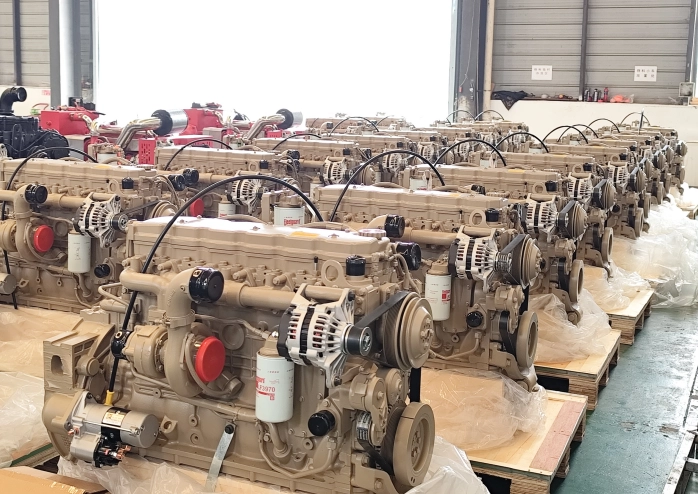
Une machine peut réussir tous les contrôles de compatibilité mécanique et pourtant échouer à celui qui bloque le projet : les émissions. Les fixations sont alignées, la puissance semble correcte, mais le moteur peut ne pas être conforme à la réglementation du lieu d'utilisation. C'est pourquoi le choix d'un moteur Cummins 6.7 pour un nouvel engin hors route doit se baser sur le marché de destination, et non sur l'inspection du compartiment moteur.
À ANTAIOS POWERNous fournissons des moteurs diesel neufs pour applications hors route et traitons chaque projet comme une solution sur mesure, et non comme une simple vente de modèle. Nous analysons la puissance, la vitesse, les interfaces, le refroidissement, la configuration de l'échappement, l'espace disponible et les conditions d'utilisation. Pour en savoir plus sur notre approche, consultez notre site web. Compagnie ANTAIOS POWER profilL’objectif est simple : le moteur doit être adapté simultanément à la machine, à la charge de travail et au plan de conformité.
Qu’est-ce qui détermine si un QSB6.7 répond aux exigences locales en matière d’émissions ?
Avant de comparer le matériel, définissez la règle à laquelle la machine doit se conformer. La conformité dépend de la destination, de l'application et des preuves requises.
Réglementation du marché cible
La réglementation relative aux véhicules non routiers varie selon les marchés. Une configuration homologuée dans un pays peut nécessiter des commandes ou un système d'échappement différents dans un autre ; il est donc essentiel de définir la destination avant de finaliser la conception de la machine.
Catégorie d'application des équipements
Les équipements de construction, miniers et industriels peuvent suivre des procédures de conformité différentes. Un moteur Cummins de 6,7 litres, choisi uniquement en fonction de sa cylindrée et de sa puissance nominale, peut s'avérer inadapté à l'application finale.
Preuves de conformité requises
Demandez à quelle configuration précise elle est censée répondre et quels documents l'accompagnent. Les données d'essai et la certification réglementaire sont liées, mais non interchangeables.
Quelles sont les caractéristiques du moteur Cummins 6.7 les plus importantes pour les performances en matière d'émissions ?
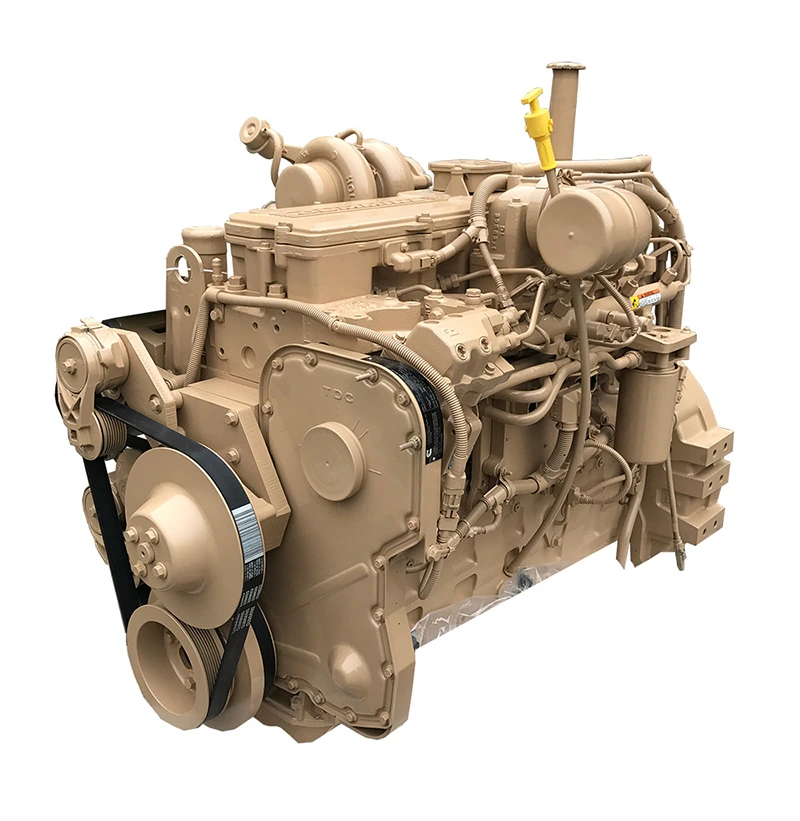
La plateforme QSB6.7 utilise un moteur six cylindres en ligne de 6,7 litres, un alésage de 107 mm, une course de 124 mm, un turbocompresseur avec refroidissement intermédiaire et une injection directe haute pression à rampe commune. Ces caractéristiques permettent un contrôle précis de la combustion, mais le résultat reste tributaire du calibrage et de la configuration de l'échappement.
Injection à rampe commune haute pression
L'injection à rampe commune permet un contrôle plus précis de la quantité et du moment d'injection du carburant en fonction des variations de charge. Ceci est particulièrement important pour les équipements où le moteur fonctionne rarement longtemps au même point de régime.
Refroidissement intermédiaire turbocompressé
Le débit d'air et la température de l'air de suralimentation influent sur la qualité de la combustion, les émissions de fumée, la réactivité et la charge thermique. La suralimentation, l'intercooler, l'alimentation en carburant et le refroidissement doivent fonctionner de concert.
Calibrage de la puissance et du couple

Le Série ANTAIOS QSB6.7 Il propose plusieurs niveaux de puissance, permettant ainsi d'adapter la sortie au profil de charge réel plutôt que de simplement choisir le chiffre le plus élevé.
| Modèle QSB6.7 | Puissance nominale | Vitesse nominale | Couple maximal |
| QSB6.7-C130-30 | 99 kW | 2200 tr/min | 580 N·m à 1400 tr/min |
| QSB6.7-C155-30 | 116 kW | 2000 tr/min | 622 N·m à 1500 tr/min |
| QSB6.7-C220-30 | 164 kW | 2200 tr/min | 949 N·m à 1500 tr/min |
| QSB6.7-C260-30 | 194 kW | 2200 tr/min | 990 N·m à 1500 tr/min |
Comment adapter la configuration des émissions à votre marché ?
L'option « compatible » ne se limite pas à une simple vérification dimensionnelle. Un moteur Cummins 6.7 peut nécessiter une combinaison spécifique de réglages, de composants d'échappement et d'adaptations d'installation propres au marché.
Sélection du système de post-traitement
La configuration de l'échappement requise dépend de la réglementation applicable et de la configuration du moteur. Elle peut également modifier le tracé, la protection thermique, l'accessibilité pour l'entretien et l'espace disponible.
Calibrage du calculateur et de la combustion
La puissance, le couple, la stratégie d'injection et la gestion de l'air sont liés. Modifier l'un de ces éléments sans vérifier les autres peut entraîner une mauvaise réponse, de la fumée ou un fonctionnement poussif en charge.
Intégration de l'admission et de l'échappement
Quelques centimètres peuvent engendrer de véritables problèmes d'ingénierie. Lors de la conception de la machine, il convient de vérifier les restrictions d'admission d'air, la position de l'échappement, l'agencement du radiateur, le cheminement des durites et les structures environnantes.
Qu’est-ce qui doit rester inchangé au-delà de la conformité aux normes d’émissions ?
La conformité aux normes d'émissions ne compense pas une mauvaise adéquation mécanique. Le moteur et la machine doivent toujours fonctionner comme un seul ensemble.
Compatibilité en matière de puissance et de couple
Ne comparez pas uniquement la puissance de crête. Vérifiez la vitesse nominale, le couple au régime de fonctionnement et le profil de charge auquel l'équipement sera soumis.
Compatibilité de l'interface mécanique
Avant la production, veuillez confirmer le volant moteur, le carter de volant moteur, l'interface SAE, les points de montage, les besoins en prise de force et les positions de connexion.
Compatibilité en matière de refroidissement et d'installation
Les dimensions de référence de la base pour la série QSB6.7 sont de 1150 × 810 × 910 mm, pour un poids net nominal de 520 kg, hors ventilateur et radiateur. Il convient de prévoir un espace suffisant pour les composants de refroidissement, le dégagement de l'échappement, les durites, les faisceaux de câbles et l'accès pour la maintenance lors de l'installation.
Que doivent vérifier les acheteurs avant de commander un QSB6.7 compatible ?
Pour tout nouveau programme d'équipement, il est impératif de régler les questions d'émissions et de compatibilité avant la commande. Un moteur Cummins 6.7 doit faire l'objet d'un accord technique écrit, et non d'une simple description de modèle.
Données sur le moteur et l'équipement
Préparer la puissance cible, la vitesse nominale, le type d'équipement, les schémas d'installation, les dimensions d'interface, le plan de refroidissement, la position d'échappement et les conditions de travail.
Documents relatifs aux émissions et à la conformité
Indiquez par écrit le pays de destination et le niveau d'émissions non routières requis. Si une certification officielle est exigée, les résultats d'essais en laboratoire ne sauraient s'y substituer.
Enregistrements d'essais en laboratoire et de traçabilité
Le Processus de service ANTAIOS POWER utilise un processus de test en laboratoire défini et des enregistrements traçables, offrant aux acheteurs des preuves plus utiles qu'une simple vidéo de démarrage.
| Élément de vérification | Testeur de puissance ANTAIOS |
| Essais moteurs globaux | Plus de 30 éléments de test |
| Données de performance | 18 éléments de données clés |
| mesure des polluants | Cinq indicateurs peuvent être testés, notamment les NOx, le CO, les HC et l'opacité des fumées. |
| Vérification des données | Les données du dynamomètre et celles des capteurs du moteur peuvent être comparées. |
Pourquoi choisir ANTAIOS POWER pour un projet QSB6.7 parfaitement adapté ?
Un fournisseur technique apporte une valeur ajoutée lorsque le moteur est considéré comme faisant partie intégrante de la machine plutôt que comme un simple boîtier affichant un prix.
QSB6.7 Correspondance des produits
ANTAIOS POWER adapte la puissance nominale du QSB6.7 à l'équipement au lieu de fournir une puissance fixe. La puissance, la vitesse et le couple nominaux varient suffisamment pour que le choix repose sur une véritable décision d'ingénierie.
Processus de vérification technique
Le processus comprend la collecte des exigences, la revue de la configuration, les vérifications de compatibilité, l'accord technique, la production, les essais moteurs, l'inspection et la livraison.
Consultation et confirmation du projet
Envoyer au marché de destinationPour connaître le niveau d'émissions requis, le type d'équipement, la puissance et la vitesse cibles, les informations d'installation et les conditions de fonctionnement, veuillez contacter le service technique d'ANTAIOS POWER. Le moteur Cummins 6.7 adapté doit s'intégrer parfaitement à la machine et ne pas se contenter de s'insérer entre les longerons du châssis.
Conclusion
Le choix d'un moteur Cummins 6.7 compatible ne doit pas se limiter à ses dimensions, sa puissance ou à la notoriété de son nom. Notre analyse révèle qu'une décision d'achat éclairée repose sur quatre critères : la machine elle-même, son cycle d'utilisation, la réglementation locale en matière d'émissions et les documents fournis avec le moteur.
Une fois ces facteurs validés avant la production, la conformité devient un critère de conception essentiel pour un équipement de qualité, et non un problème de dernière minute. C'est là tout l'intérêt de l'adéquation technique : moins d'hypothèses, moins de surprises et une machine prête pour le marché.
FAQ
Q : Tous les moteurs Cummins 6.7 utilisent-ils la même configuration d'émissions ?
R : Non. Les moteurs d'une même cylindrée peuvent présenter des caractéristiques, des étalonnages et des configurations spécifiques à l'application différents. Veuillez vérifier les spécifications exactes, les exigences de destination, la configuration de l'échappement et les documents fournis avant de passer commande.
Q : La puissance nominale est-elle suffisante lors du choix d'un QSB6.7 pour un nouvel équipement ?
A : Non. Nous devons également vérifier la vitesse nominale, la courbe de couple, le volant moteur et le carter, les points de fixation, le refroidissement, la configuration de l'échappement, les commandes électriques, l'espace d'installation, ainsi que le système d'émissions requis.
Q : Les essais sur banc d'essai peuvent-ils prouver qu'un moteur est conforme à la législation de mon marché ?
A: Les essais en laboratoire permettent d'évaluer les performances d'un produit et de vérifier les émissions pertinentes. Cependant, dans de nombreux pays, les essais d'émissions doivent être certifiés ou approuvés par la législation locale. Consultez à la fois les preuves techniques et les documents réglementaires requis.
Article récent




Produits associés
Produits les plus vendus

Série 912/W
Le moteur de la série 912 est un moteur diesel refroidi par air, d'une puissance de 14 à 76 kW et d'un régime de 1 500 à 2 500 tr/min. Cette série est disponible en versions 2, 3, 4 et 6 cylindres.
La série 912W est une version améliorée de la série 912. Conçue pour mieux s'adapter aux conditions de travail dans les mines souterraines, elle bénéficie d'émissions réduites.
Au cours des dix dernières années, les moteurs diesel ANTAIOS de la série 912 ont été exportés dans plus de 100 pays. Ils sont principalement utilisés dans les engins de construction, l'industrie et l'agriculture.

Série 914
Le moteur diesel de la série 914 est couramment utilisé dans les mines souterraines. Ce moteur refroidi par air offre une puissance de 41 à 141 kW et un régime de 1 500 à 2 500 tr/min. Il est disponible en versions atmosphérique et turbocompressée pour répondre à vos différents besoins.
Contrairement à la plupart des moteurs de la série 914 produits en Chine, ANTAIOS utilise des pièces d'origine allemande pour ses moteurs de cette série. Ceci garantit la qualité du moteur tout en vous offrant un prix plus avantageux que les marques européennes.

Série 2012
Les moteurs de la série 2012 sont des moteurs à refroidissement liquide fabriqués par DEUTZ en Allemagne. Cette série est largement utilisée dans les secteurs de la construction et de la production d'énergie. Disponibles en versions 4 et 6 cylindres, les modèles les plus courants sont les BF4M2012, BF4M2012C et BF6M2012C. Si votre équipement est alimenté par un moteur DEUTZ de la série 2012, ANTAIOS peut vous proposer des solutions de remplacement adaptées.
Nos moteurs diesel de la série 2012 offrent une puissance de 75 à 155 kW et des régimes de 1 500 à 2 500 tr/min. Pour des besoins spécifiques, nous proposons également des configurations optionnelles, notamment un système de refroidissement personnalisé.

Série TCD2012/2013
La série TCD2012/2013 est un moteur diesel à rampe commune haute pression, refroidi par eau. Comparé aux versions standard, ce moteur offre des performances d'émissions supérieures, le rendant ainsi plus adapté aux applications aux exigences d'émissions plus strictes. Il a été largement utilisé dans les mines souterraines.
Les moteurs de la série TCD2012/2013 fournis par ANTAIOS sont généralement livrés sous un mois environ. Si la configuration requise est simple, ce délai peut être réduit à une dizaine de jours. Les moteurs de la série TCD2012 étant fabriqués sur commande, ils ne sont pas disponibles en stock. La production de chaque moteur est lancée après réception de votre commande.

Série 1015
Le moteur DEUTZ série 1015 est un moteur de grande taille à refroidissement liquide, disponible en versions 6 et 8 cylindres. Contrairement aux autres moteurs DEUTZ à 4 ou 6 cylindres à refroidissement liquide, ce moteur est doté d'une configuration en V, ce qui réduit considérablement l'espace nécessaire à son installation.
Les moteurs BFM1015 fournis par ANTAIOS sont fabriqués par des constructeurs chinois réputés. Ces moteurs sont généralement utilisés dans des équipements spécialisés exigeant des performances élevées. Avant livraison, chaque moteur est soumis à des tests au banc d'essai conformément aux normes du fabricant, ainsi qu'à des tests supplémentaires répondant à des exigences spécifiques, afin de garantir que le moteur fourni réponde parfaitement à vos besoins.

Série TCD2015
Le moteur de la série TCD2015 est un moteur diesel en V, 4 temps, refroidi par eau. Disponible en versions V6 et V8, il offre une puissance de 240 à 500 kW et un régime de fonctionnement standard de 2 100 tr/min. Conforme à la norme Euro III et aux normes supérieures, ce moteur est largement utilisé dans les engins de chantier, les groupes électrogènes, les équipements miniers, la propulsion marine et les équipements pétroliers et gaziers.
Outre les configurations personnalisables, ANTAIOS propose également des peintures sur mesure. Sauf indication contraire, la peinture grise est généralement proposée.